
Kylo Kisspeptin-10 stays stable when you keep the lyophilized powder cold and dry, reconstitute it with the diluent your supplier specifies, and protect the solution from heat, light, and repeated freeze-thaw cycles. Plan on about fifteen minutes at the bench, plus a clean workspace and a calm, unhurried hand. The difficulty is low, but the margin for sloppiness is thinner than you’d think.
Here’s why it matters. A peptide vial is a bit like a first edition tucked into a good slipcase: sealed and quiet, it can last, but one careless afternoon on a sunny windowsill and the damage is done. I once left a paperback on a dashboard through a July road trip, and the warped, sun-bleached spine taught me more about storage than any manual could. Peptides are less forgiving still. If you’re stocking a batch, the supplier’s certificate and handling sheet are your real source for exact storage temperatures and shelf life, so keep them close.
Think of your setup like a cozy reading corner: everything you need within reach, nothing extra cluttering the space. Everything below is for laboratory research use only.
What Kisspeptin-10 Is and Why It Needs Gentle Treatment
Kisspeptin-10 is a small piece of a larger signaling protein, and researchers use it to study how the body regulates reproductive hormones. It’s a peptide, which just means a short chain of amino acids, the same building blocks that make up every protein. Think of it as a single, delicate sentence torn from a much longer book. It’s usually shipped lyophilized, a fancy word for freeze-dried, so it arrives as a dry, fluffy powder rather than a liquid.
Here’s why that matters at the bench. A rare first edition can’t live just anywhere. Too much humidity warps the pages, a sunny windowsill fades the cover, a hot attic makes the glue brittle, and carrying it in and out of a damp cellar over and over wears it down. Peptides are fussy in much the same way. Moisture can break them apart, heat speeds up that damage, light and oxygen can alter their structure (that’s oxidation, a slow chemical “rusting”), and repeated swings between cold and warm add stress each time.
One firm reminder before we go further: kisspeptin-10 is a research-use-only material. It is not intended for human or veterinary use, and everything in this guide assumes a qualified laboratory setting.
Tools and Materials to Have Ready Before You Open the Vial
Before a good reading session, I like to set the stage: a warm lamp, a blanket, my tea within arm’s reach. Handling kisspeptin-10 deserves the same ritual. Gather everything first, so you never have to leave a open vial sitting while you hunt for a tube rack.
Here’s what to have on the bench before you touch anything:
- The lyophilized kisspeptin-10 vial, with its certificate of analysis on hand
- The supplier’s safety data sheet (SDS), printed or easily accessible
- A sterile solvent, such as sterile water or a buffer, chosen per supplier guidance
- Low-protein-binding microcentrifuge tubes for aliquots
- Calibrated micropipettes with sterile tips
- Labels and a lab notebook for tracking everything
- A -20°C or -80°C freezer with space cleared for your aliquots
- Desiccant to keep the unopened vial dry
- Nitrile gloves, a lab coat, and eye protection
One note on that solvent line. It’s tempting to grab whatever is nearest, but the right solvent and concentration vary by supplier and by how you plan to use the peptide. Treat the supplier’s documentation as your map here, the same way you’d trust a good guidebook over a hunch when you’re in an unfamiliar city.
Low-protein-binding tubes are worth the small extra cost. Peptides can cling to ordinary plastic, and you don’t want a portion of your material quietly stuck to the walls. Once everything is laid out and labeled, you’re ready to move on.
Safety Warnings and Stop Conditions Before You Begin
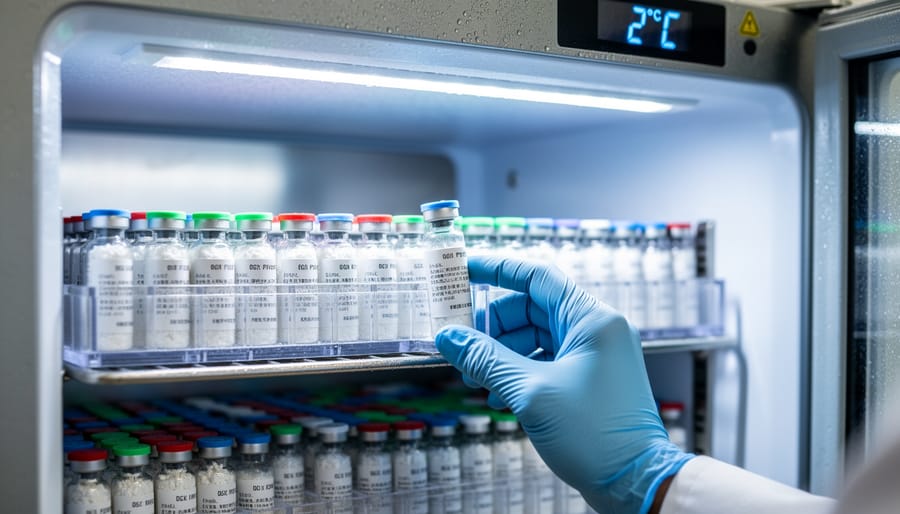
Before you touch the vial, take a calm breath and read the safety data sheet (SDS) that came with it. Think of it as the author’s note at the front of a book: short, easy to skip, and surprisingly useful. It tells you what hazards to expect, how to handle a spill, and what your institution expects from you.
Wear your usual personal protective equipment: gloves, a lab coat, and eye protection. Work in a clean, uncluttered area, or inside a hood if your institutional policy calls for it. Lyophilized powder is light and can drift, so open vials gently and avoid breathing in any dust. Your biosafety and chemical hygiene rules apply here exactly as they do for any other reagent.
Once you’re set, you can follow the steps in the next section with confidence. First, though, know your stop conditions. Pause if the vial is damaged or the label is missing, if paperwork is absent, if the powder looks damp or discolored, or if you have any doubt about what’s inside. A shaky start is a bad sign, so don’t talk yourself into proceeding.
Finally, dispose of any unusable material according to your local regulations and institutional waste procedures.
How to Store and Handle Kisspeptin-10 Step by Step
Receiving and Storing the Lyophilized Powder
When the courier hands over that small, well-padded box, treat it like a rare book arriving by post: open it carefully and check the condition before you do anything else. Look for a cracked vial, a loose cap, or packaging that’s been crushed or soaked. Confirm the label matches your order, and make sure the certificate of analysis and safety data sheet are included. If anything seems off, set the vial aside and contact the supplier before use.
Once everything checks out, here’s the sequence worth following, from the doorstep through to your freezer:
- Inspect the package and log the receipt date and lot number.
- Store the unopened lyophilized vial cold (commonly -20°C, but confirm with your supplier’s documentation), away from light and moisture.
- Let the vial warm to room temperature before opening, so condensation doesn’t form on the powder.
- Reconstitute gently with the recommended solvent, swirling rather than shaking vigorously.
- Divide the solution into single-use aliquots in low-protein-binding tubes.
- Label each aliquot with the name, concentration, and date.
- Freeze aliquots promptly and avoid repeated freeze-thaw cycles.
- Record every step in your lab notebook.
One small tip: tuck the vial into a sealed container with a desiccant packet. It’s like keeping a favorite paperback in a dry spot, because moisture is the quiet enemy here. Steps four through eight are covered in more detail below.
Reconstituting and Aliquoting With a Light Touch
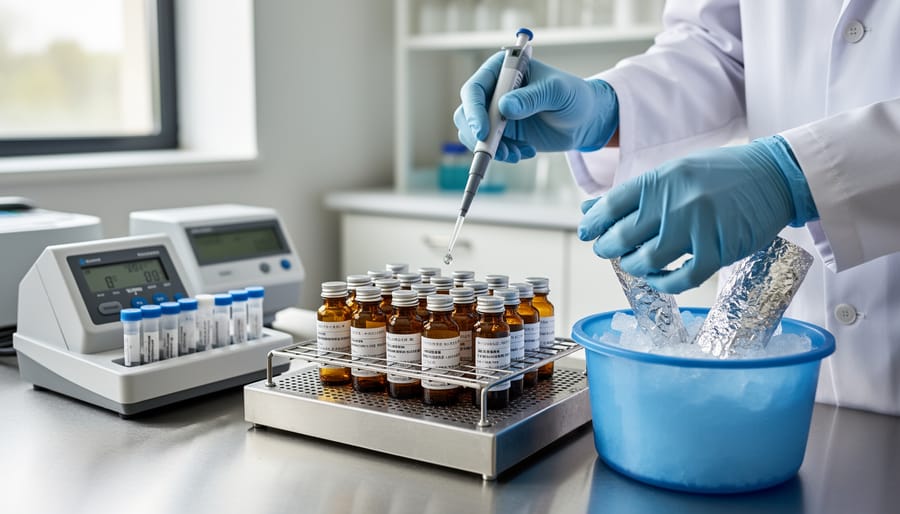
Patience is the whole game here. Take the sealed vial out of cold storage and let it sit on the bench until it reaches room temperature, usually 15 to 30 minutes. Opening it cold invites condensation, and moisture is the quiet enemy of lyophilized powder. Wipe the vial, then add your solvent slowly, letting it run down the inside wall instead of blasting the powder directly. Swirl gently or roll the vial between your fingers. Skip the vortexer and the vigorous shaking, which can foam the solution and stress the peptide. If it needs a few minutes to dissolve fully, give it those minutes. Always follow the supplier’s documentation for the right solvent and concentration.
Once the solution is clear, divide it into small single-use aliquots, meaning portions sized for one experiment each. Every freeze-thaw cycle puts the peptide through a little stress, so thawing one tube repeatedly is a bit like reading a paperback so many times the spine gives out. One thaw per tube keeps things consistent.
Then label every tube, right away. I once lost an entire afternoon to a drawer of identical bookmarks with no hint of which book each belonged to, and unlabeled tubes are the lab version of that headache. Write the compound name, concentration, date, solvent, and your initials. Future-you will be grateful.
Short-Term and Long-Term Storage of Reconstituted Solution
Once kisspeptin-10 is in solution, the clock starts ticking faster. A reconstituted peptide is far less forgiving than the dry powder, so how you store it depends on when you plan to use it.
For short-term work, such as a few days of planned experiments, keep the working aliquot refrigerated and tightly capped, away from light. For anything longer, freeze your aliquots and pull out only what you need. Think of it like keeping the books you’re reading on the nightstand while the rest of the collection stays safely shelved.
Here’s the honest part: there’s no single universal stability number. Windows depend on the supplier’s formulation, the solvent, the concentration, and the container. Confirm the guidance on your certificate of analysis or technical sheet, and write your discard date right on the label. If the documentation is silent, ask the supplier before assuming.
Common Mistakes That Quietly Ruin a Peptide

Everyone learns these lessons once. Think of it like dog-earing a page you later regret: no one means to do it, and it’s easy to fix once you know better. Here are the usual culprits and the simple fix for each:
- Opening a vial straight from the freezer: let it sit sealed until it reaches room temperature so condensation doesn’t form on the powder.
- Shaking the vial vigorously: swirl or gently roll it instead, since harsh agitation can stress the peptide.
- Refreezing the same tube again and again: split the solution into single-use aliquots and thaw each one only once.
- Using a frost-free freezer: choose a stable, non-cycling freezer, because the periodic warming that clears frost also shakes up your sample.
- Leaving vials in the light: keep them in their box or an opaque container, away from bright benches and windows.
- Skipping labels: write the name, concentration, date, and solvent on every tube before it goes anywhere.
Most of these come down to patience and a little preparation. Moisture, heat swings, and light are the slow, quiet threats, and they rarely announce themselves. A cloudy tube or a mystery label shows up weeks later, when you can’t tell what went wrong. Build the habits above into your routine and you’ll rarely have to wonder.
Verifying Your Storage Worked and What to Do Next
Once your kisspeptin-10 has been stored, the next job is confirming it still deserves a place on your bench. Start with your eyes. A good reconstituted solution should look clear, with no cloudiness, floating particles, or color change. Then compare what you see against the certificate of analysis, which tells you what the peptide looked like and how pure it was at the start. Keep a simple storage log noting dates, temperatures, who opened what, and when each aliquot was made. If anything looks off, or your results suddenly wobble, consider analytical verification. HPLC (a method that separates a sample into its parts to show how pure it is) and mass spectrometry (which weighs the molecules to confirm you have the right one) can settle the question.
Set review dates for every aliquot, discard anything past its stability window, and send your questions to the supplier’s technical team. Picture a well-kept lab as a quiet library reading room, where every tube has its shelf, its label, and its due date.
How long can reconstituted kisspeptin-10 be stored?
It depends on the solvent, concentration, and supplier, so check the documentation that came with your batch rather than trusting one universal number. Generally, short-term use is refrigerated and longer storage means frozen aliquots.
Can I refreeze an aliquot?
It’s best not to. Repeated freeze-thaw cycles can damage peptides, which is exactly why you divide the solution into single-use aliquots up front.
What solvent should I use?
Follow your supplier’s instructions for the specific lot you have. The recommended solvent and concentration are usually listed in the product documentation.
How do I know if my peptide has degraded?
Cloudiness, particles, or discoloration are warning signs, as are unexpected experimental results. If you’re unsure, HPLC or mass spectrometry can confirm purity and identity.
So here’s the short version of storing and handling kisspeptin-10 in the laboratory: keep the lyophilized powder cold, dry, and dark, reconstitute gently, and split the solution into small aliquots so you never have to freeze-thaw the same tube twice. Label every vial, keep a simple log, and let the supplier’s certificate of analysis settle any question about temperatures and timelines.
None of it is complicated. It just works best as a habit, the way caring for a beloved bookshelf does. A little attention each time, and everything stays in good shape. The best lab routines feel a lot like good reading habits: small, steady, and easy to keep up.
I’d love to hear how you keep your own bench or reading nook organized. Share your favorite tricks, and until next time, happy handling and happy reading!