Look beyond star ratings when selecting books for your children—the most valuable reviews reveal age-appropriate content warnings, educational themes, and emotional readiness indicators that generic summaries miss entirely. I discovered this while traveling through a charming bookshop in Edinburgh, where a bookseller’s handwritten note about a picture book’s gentle approach to grief helped me choose the perfect story for my nephew processing his grandfather’s passing.
Focus on reviews that specify reading level complexity, not just publisher age recommendations, since a confident seven-year-old reader often needs different material than a reluctant nine-year-old. Quality parent-focused reviews dissect vocabulary difficulty, sentence structure, and whether illustrations support comprehension or merely decorate pages.
Seek reviewers who address conversation starters, because the best children’s books spark dialogue about friendship, resilience, identity, and values your family holds dear. A review mentioning “includes questions about fairness that led to dinner table discussions” offers more utility than one simply praising “beautiful prose.”
Prioritize reviews discussing representation and cultural authenticity, particularly when introducing your child to experiences outside their immediate world. Thoughtful reviewers identify whether diverse characters are fully developed individuals or tokenized additions, whether cultural elements are researched or stereotyped.
Consider the reviewer’s credentials and reading context—a librarian’s perspective differs from a homeschooling parent’s, and both provide distinct value depending on your needs. Reviews mentioning how books performed during bedtime routines, long car trips, or independent reading time give practical insight no plot summary can match.
The reviews you choose shape your child’s literary foundation, turning reading time from obligation into adventure.
Why Parents Need a Different Kind of Book Review
I remember standing in the bookstore last summer, clutching a beautifully reviewed novel that had earned five stars from every major publication. The cover promised adventure, the blurb sounded enchanting, and the literary community was buzzing about its “lyrical prose” and “unforgettable characters.” But as I flipped through the pages with my nine-year-old daughter in mind, a knot formed in my stomach. Yes, it was brilliant writing, but was it right for her? The glowing reviews hadn’t mentioned the complex narrative structure that jumped between timelines, the vocabulary that would send us to the dictionary every other page, or the surprisingly dark themes woven throughout.
That’s when it hit me: standard book reviews and parent-focused book reviews serve entirely different purposes.
Traditional literary reviews celebrate artistic merit, innovative storytelling, and cultural significance. They’re written for adult readers who can navigate content independently and make informed choices based on their own preferences. But parents need something more practical, more specific. We’re not just asking “Is this book good?” We’re asking “Is this book good for my child, right now, at this particular stage of their development?”
The concerns that keep parents up at night rarely appear in conventional reviews:
- Age-appropriateness beyond just a suggested age range
- Specific content warnings that go deeper than general ratings
- Actual reading level versus marketed age group
- Length and chapter structure for attention span considerations
- Vocabulary complexity and learning opportunities
- Themes that might require parental guidance or discussion
- Representation and values reflected in the story
- Potential triggers or sensitive topics
This gap between literary excellence and parental practicality isn’t about dumbing down literature or shielding children from challenging content. It’s about matching the right book with the right reader at the right time. A story might be absolutely perfect for one family while being entirely wrong for another, even if both children are the same age. Parents need reviews that acknowledge this nuance and provide the detailed information necessary to make those judgment calls ourselves.
Essential Elements Every Parent-Focused Book Review Should Include
Age Range and Reading Level (Not Just the Publisher’s Suggestion)
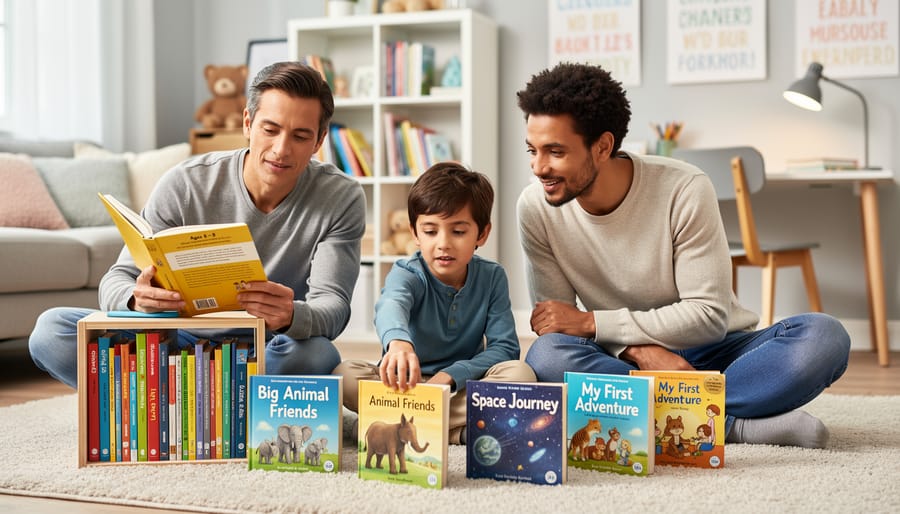
Here’s something I learned the hard way: that charming middle-grade book recommended for ages 8-12? My sensitive eight-year-old wasn’t ready for the parent-death subplot, even though the publisher insisted it was age-appropriate. This experience taught me that publisher age ranges are starting points, not gospel truth.
When writing reviews for parents, you’re essentially becoming a literary guide who knows that every child develops differently. A book’s official age recommendation might be based on reading level alone, completely overlooking emotional maturity requirements. I once reviewed a beautifully illustrated picture book marketed for ages 4-8 that dealt with divorce in surprisingly complex ways. While a precocious six-year-old navigating their parents’ separation might find it comforting, it could confuse or worry a sheltered eight-year-old whose world feels secure.
Consider vocabulary complexity separately from content maturity. A thriller with simple sentences might still contain themes of violence inappropriate for younger readers who can technically decode every word. Conversely, that gorgeously written fantasy novel with advanced vocabulary might be perfect for a mature ten-year-old who loves being challenged, even if it’s labeled young adult.
In your reviews, be specific about why you’re adjusting the age recommendation. Mention specific elements: “While marketed for ages 9-12, the bullying scenes are intense and might be better suited for older tweens” or “Despite being labeled young adult, the straightforward language and gentle themes work beautifully for advanced middle-grade readers.” You’re giving parents the context they need to make informed decisions for their unique children.
Content Considerations Without Spoilers
Here’s the balance I’ve learned to strike: flagging content concerns without becoming a plot-spoiler. When I reviewed a middle-grade fantasy last month, I needed to mention that a beloved pet dies early in the story. Instead of revealing which character or when, I simply noted “includes animal death that may upset sensitive readers” in a dedicated content notice at the review’s beginning.
Think of content flags as thoughtful guardrails rather than warning sirens. Create a brief, scannable list using broad categories: bullying themes, parental absence, body image discussions, fantasy violence, or mild language. I always specify intensity levels too—there’s a world of difference between a book that “touches on divorce” versus one where “divorce is the central conflict throughout.”
For scary elements, I’ve found that describing the emotional tone works better than detailing specific scenes. “Contains suspenseful moments appropriate for confident readers 10+” tells parents what they need without diminishing the reading experience. When a book includes difficult topics like grief or mental health, I mention whether these themes are handled with sensitivity and resolution, which often matters more to parents than whether they appear at all.
Language concerns deserve specificity without quotation. Rather than listing every word, I note frequency: “occasional mild profanity” or “characters use insults typical of middle school hallways.” This approach respects both the parent’s right to know and the child’s opportunity to discover the story naturally.
Remember, you’re preparing parents, not protecting them from the entire narrative. The goal is informed decision-making, not censorship through excessive detail.
The ‘Read Together’ or ‘Independent Read’ Question
One of my favorite parts of reviewing books for parents is helping them navigate the “how” of reading—not just the “what.” I remember discovering that certain books my daughter adored as solo reads fell completely flat when I tried reading them aloud at bedtime. The pacing was off, the chapters too long, and we both felt frustrated instead of enchanted.
When crafting your review, share insights about the book’s ideal reading context. Is this a page-turner that emerging readers will devour independently, building confidence as they go? Mention the chapter length, font size, and whether illustrations break up the text—practical details that matter when a seven-year-old wants to tackle something alone.
For read-aloud candidates, consider the rhythm of the language. Does it flow naturally when spoken? Are there funny voices to attempt or poetic passages that create cozy moments? I’ve found that books with rich dialogue make phenomenal bedtime reads, while dense descriptive passages sometimes lose younger listeners.
Don’t forget books that spark conversation. Some stories beg for family discussions about friendship, courage, or navigating difficult emotions. Flag these opportunities in your review—parents treasure books that become springboards for meaningful talks. By addressing the reading experience itself, you transform a simple recommendation into genuinely useful guidance for busy families trying to make reading time magical.
What Makes It Worth Reading (Beyond the Plot)
Here’s where book reviews for parents truly shine—they go beyond simply recounting what happens on each page. When I started reviewing children’s books for my own family, I realized the magic wasn’t in retelling the story but in uncovering the layers beneath it.
Think about educational value first. Does the book introduce concepts like empathy, problem-solving, or resilience without feeling preachy? I remember reading a picture book about a nervous squirrel preparing for winter with my daughter, and it sparked an entire conversation about planning ahead and managing worries. That’s the kind of sneaky learning we want to highlight in our reviews.
Character development offers another goldmine. Children don’t just need heroes; they need characters who mess up, apologize, and grow. When reviewing, point out whether characters face realistic challenges and how they navigate them. Does the protagonist learn to share? Stand up for themselves? These moments become mirrors for young readers.
The conversation starters matter enormously. A worthwhile book plants seeds for discussions that extend beyond bedtime. You might note: “This book opened the door for us to talk about what makes a good friend” or “My son asked three follow-up questions about how submarines work after finishing this.” Parents crave these connection points.
Finally, address the child’s perspective authentically. What makes kids actually want to pick up this book? Is it the laugh-out-loud humor? The satisfying plot twist? The fact that the main character loves dinosaurs just like they do? I’ve found that books my children request repeatedly often have that special something—a relatable emotion, a compelling mystery, or simply characters they wish were their friends. When you capture this genuine appeal in your review, you’re giving parents the confidence that their child will genuinely enjoy the reading experience, not just tolerate it.
Structuring Your Review for Busy Parents
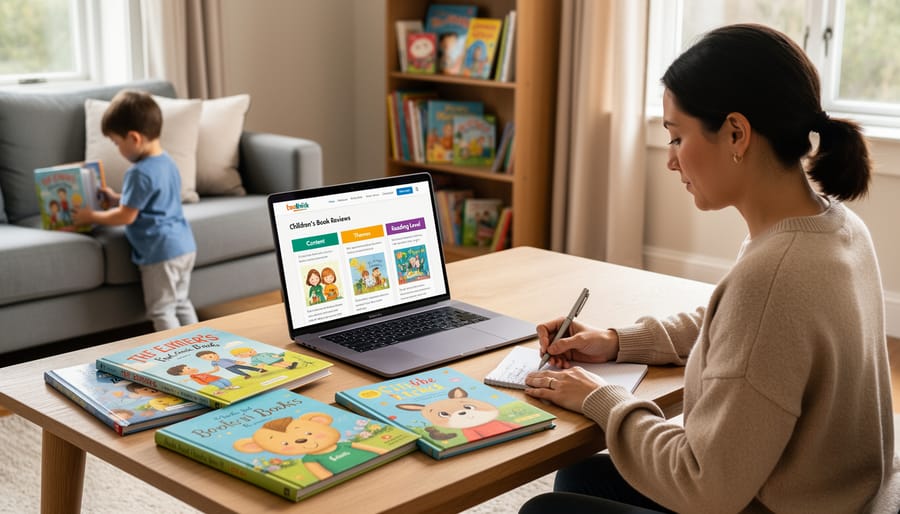
Let me share something I learned while frantically scrolling through reviews on my phone during my daughter’s soccer practice. I had exactly seven minutes before she’d come running back, thirsty and full of questions, and I desperately needed to know if a particular middle-grade novel was appropriate for her. That’s when it hit me: parent reviews need to work like a well-organized kitchen, everything within easy reach.
The truth is, most parents are reading reviews in stolen moments between car pool drop-offs, during lunch breaks, or late at night when their brains are already half-melted. Your review structure needs to honor that reality.
Start with what I call the quick-scan section at the very top. Think of it as your review’s table of contents, but actually useful. Here’s a template that works beautifully:
| Section | What to Include | Example |
|---|---|---|
| At a Glance | Age range, page count, genre | Ages 8-12, 256 pages, Fantasy |
| Best For | Specific reader types | Reluctant readers who love humor |
| Parent Heads-Up | Content considerations | Mild peril, one chapter about loss |
| Why Kids Will Love It | Kid appeal factors | Fast-paced, hilarious dialogue, dragons |
| The Literary Goods | Educational value | Rich vocabulary, themes of courage |
After this snapshot, organize your deeper discussion into clearly marked sections with generous white space. I’ve found that short paragraphs, three to four sentences maximum, keep exhausted eyes from glazing over.
Use subheadings liberally. They act like signposts, letting parents jump directly to what matters most to them. One parent might need to know about reading level while another is hunting for discussion topics they can explore with their child.
Here’s a trick I picked up from my own late-night review writing sessions: include a pull-quote or standout sentence that captures the book’s essence. It gives skimmers something concrete to grab onto, like leaving breadcrumbs through the forest of information.
Remember, a well-structured review respects that parents are doing mental gymnastics just keeping everyone fed and relatively clean. Make your review their ally, not another task requiring deep concentration.

Finding Your Voice: Balancing Honesty with Enthusiasm
Here’s the truth I’ve learned from writing dozens of book reviews as a parent: authenticity resonates far more than perfection. When I first started sharing my thoughts on children’s books, I worried constantly about stepping on toes. Would other parents think I was too permissive for loving that irreverent picture book? Too strict for questioning violent themes in a popular middle-grade novel?
Then I received a message from another parent that changed everything. She thanked me for honestly mentioning that a beloved bedtime story had actually stressed out her sensitive three-year-old, helping her understand why their family struggled with it. That’s when I realized helpful reviews aren’t about being right for everyone—they’re about being genuine for someone.
The key is framing your perspective as exactly that: your perspective. Instead of writing “this book teaches terrible values,” try “this didn’t align with what we’re emphasizing in our home right now.” Share the why behind your reactions. When I reviewed a chapter book featuring a protagonist who repeatedly lied to adults, I explained that while the writing was brilliant, we were navigating some honesty issues at home, making the timing tricky for us. Other parents might find it perfect for opening those exact conversations.
I always remind myself that families are beautifully diverse. What works in my living room might not work in yours, and that’s not just okay—it’s wonderful. Maybe your family adores silly potty humor books while mine gravitates toward quieter nature stories. Perhaps you’re searching for stories featuring blended families while I’m hunting for books about anxiety.
Let your enthusiasm shine through for books you love, but leave room for nuance. I might adore a book’s gorgeous illustrations while noting the pacing felt slow for my particular six-year-old. That balance—celebrating what works while acknowledging what might not suit everyone—creates reviews that genuinely help other parents navigate their unique reading journeys.
Common Pitfalls in Parent-Focused Book Reviews
I’ll confess something: when I first started writing book reviews aimed at parents, I made just about every mistake in the book. I remember gushing about a “wonderfully surprising twist” in a picture book—essentially ruining the entire experience for families who hadn’t read it yet. A well-meaning mom emailed me saying her daughter had been disappointed because my review had given away the magic. That was my wake-up call.
The truth is, writing reviews for parents requires a delicate balance that many of us get wrong initially. We’re trying to help busy caregivers make informed decisions, but in our enthusiasm or caution, we sometimes miss the mark entirely.
One of the biggest pitfalls is being frustratingly vague about content. When reviewers write things like “some mature themes” or “might not be appropriate for all children,” they’re essentially saying nothing. Parents need specifics. Is there a death of a pet? Does the book discuss divorce? These details matter tremendously when you’re deciding whether your child is ready for a particular story.
Here are some common mistakes that undermine otherwise helpful reviews:
- Spoiling key plot twists or surprise endings without warning
- Using educational jargon like “emergent literacy skills” without context
- Assuming all families share identical values or religious beliefs
- Being preachy about what children “should” or “shouldn’t” read
- Ignoring diverse family structures in relevance discussions
- Over-censoring by treating normal childhood topics as taboo
Another trap I’ve noticed is the tendency to sanitize everything or, conversely, to clutch pearls over age-appropriate content. During a literary festival in Vermont last fall, I chatted with a librarian who showed me a review warning parents about “frightening content” in Where the Wild Things Are. Sometimes we forget that children can handle—and benefit from—emotional complexity when it’s presented thoughtfully.
Where Parents Actually Look for Book Reviews
Let me tell you a secret: I discovered one of my daughter’s favorite chapter book series not through Amazon’s algorithm or a bestseller list, but through a mom’s Instagram story showing her kitchen counter covered in library books. That casual glimpse into another family’s reading life led us to a magical discovery we might have otherwise missed.
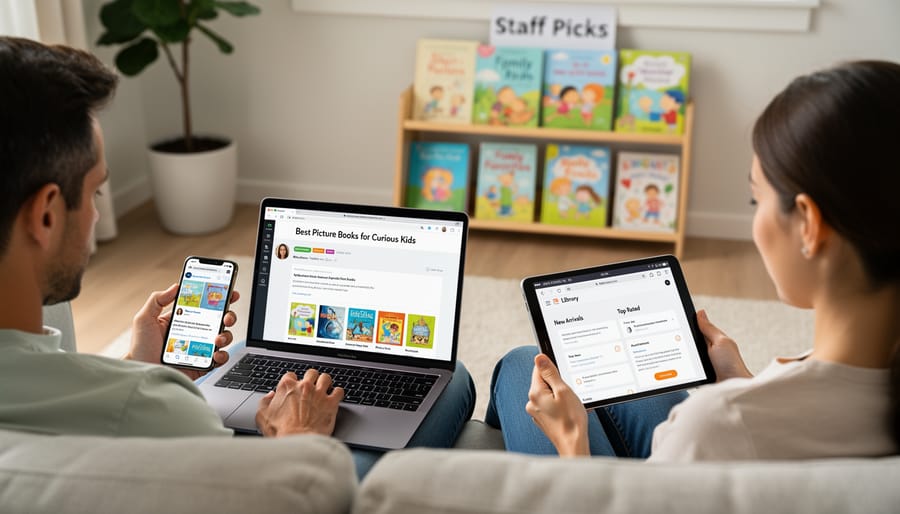
Parents today hunt for book recommendations in wonderfully varied ways. Social media has become an unexpected goldmine for authentic reviews. Facebook parenting groups buzz with real-time conversations about what’s capturing kids’ attention right now. Instagram accounts dedicated to children’s literature feature beautiful book stacks with honest captions about reading levels and themes. I’ve found myself screenshotting TikTok videos where parents share thirty-second reviews while folding laundry, their enthusiasm completely genuine and contagious.
Book blogs remain invaluable, especially those written by fellow parents who understand the unique challenge of finding books that match both reading ability and emotional maturity. These longer-form reviews often address questions that matter deeply to parents but rarely appear in professional critiques: Does this book handle divorce sensitively? Will my anxious child find the suspense overwhelming? Is there humor to balance the heavy themes?
Then there are the trusted physical spaces. Library displays curated by children’s librarians often introduce us to hidden gems. School reading lists, while sometimes predictable, come with the implicit endorsement of educators who know our kids. I still remember chatting with another parent at pickup about a book her son couldn’t put down, a conversation that led to three more recommendations before we even reached our cars.
The common thread? Community. Parents trust other parents who’ve been in the trenches, navigating bedtime battles and reluctant readers alongside them.
Remember that bedtime battle I mentioned at the beginning, with my daughter clutching three books and me mentally calculating sleep hours? Thanks to thoughtful book reviews from other parents, those negotiations have become less chaotic and more intentional. I’ve learned to trust the wisdom of reviewers who share not just star ratings, but real insights about reading levels, emotional themes, and that crucial “re-read factor” that determines whether a book will become a beloved favorite or a one-time read.
The beauty of parent-focused book reviews is that they transform book selection from guesswork into confidence. When you write or read reviews with both a reader’s passion and a parent’s practicality, you’re joining a community that values story magic as much as age-appropriateness. You’re acknowledging that choosing the right book matters—it shapes young imaginations, builds vocabulary, and creates those irreplaceable moments when a child asks, “Just one more chapter?”
As you navigate your own reading journey with your children, I encourage you to embrace both roles: the enthusiastic reader who gets genuinely excited about plot twists and beautiful illustrations, and the thoughtful parent who considers whether a book aligns with your family’s values and your child’s developmental stage. Your unique perspective matters, whether you’re writing reviews or seeking them.
I invite you to continue exploring our collection of book reviews across every genre imaginable. Happy reading, fellow book lovers!