
I still remember the moment historical fiction clicked for me. I was fifteen, sprawled across my bed with a dog-eared copy of a novel set during World War II, and suddenly the dates I’d memorized for my history exam transformed into real people making impossible choices. That’s the magic of this genre: it doesn’t just teach you about the past, it drops you right into it.
If you’re searching for historical fiction examples, you’re probably looking to experience that same transformation or maybe expand your reading beyond the usual suspects. The beauty of historical fiction in 2026 is how vast it’s become. We’re not just talking about Tudor England and Civil War America anymore, though those periods still produce stunning reads. Authors are now mining ancient Mesopotamia, medieval Japan, the Harlem Renaissance, and countless other eras that rarely got the spotlight before.
What makes a great historical fiction novel isn’t just period-accurate costumes and careful research, though those matter. The best examples weave authentic historical detail so seamlessly into their stories that you forget you’re learning anything at all. You’re just living alongside characters navigating their world, which happens to be centuries removed from ours. These books answer questions I didn’t even know I had about daily life, social structures, and what it felt like to live through moments we now see as historical footnotes.
Whether you’re brand new to the genre or you’ve already devoured every book set during the French Revolution, exploring Historical Fiction Highlights across different time periods reveals just how much territory this genre covers. From ancient civilizations to the late twentieth century, there’s a whole world of stories waiting. Let’s look at some standout examples that showcase what historical fiction does best.
What Makes Historical Fiction Truly Memorable
The best historical fiction doesn’t just recite dates and facts, it makes you forget you’re reading about the past at all. I still remember cracking open Hilary Mantel’s “Wolf Hall” and being struck by how immediate Thomas Cromwell felt, how his Tudor world seemed less like a museum exhibit and more like a place I could actually inhabit. That’s the magic, isn’t it? When an author manages to build a bridge across centuries.
The truly memorable novels master a delicate balancing act. They do historical research meticulously, anchoring their stories in genuine period details, the weight of fabric, the smell of streets, the political tensions that shaped decisions. But they never let that research overwhelm the narrative. The best writers know when to show their work and when to let it quietly inform the background. They understand that readers don’t need exhaustive descriptions of every historical process; we need just enough authentic texture to believe in the world while the story carries us forward.
Character development separates the forgettable from the unforgettable. Historical figures and fictional creations alike need psychological depth that transcends their era. Yes, they should think and act in ways consistent with their time, but they also need motivations, fears, and desires we can recognize. When we read about a Victorian woman constrained by social expectations or a soldier in ancient Rome, we should see both the historical constraints and the human being pushing against or navigating them.
The most transportive historical fiction also knows when to translate and when to preserve. Dialogue that sounds too modern breaks the spell, but dense period language alienates readers. The sweet spot lies in creating prose that evokes the past without requiring a glossary every few pages, accessible enough to keep the story moving, distinctive enough to remind us we’ve traveled somewhere different.

Ancient and Classical World Settings
The ancient world offers historical fiction writers an almost mythical canvas, where history and legend intertwine so thoroughly that novels can feel both grounded and dreamlike. These civilizations left behind enough records to inspire authenticity but enough mystery to fuel imagination.
Madeline Miller’s “The Song of Achilles” stands as perhaps the most luminous example of ancient Greek fiction in recent years. Miller retells the Trojan War through Patroclus’s eyes, transforming familiar mythology into an achingly human love story. The novel doesn’t just recreate ancient Greece; it makes you feel the Mediterranean sun on your skin and understand the honor-bound culture that drove men to die for glory. Miller followed this with “Circe”, which reimagines the witch from Homer’s Odyssey as a complex woman finding her own power across centuries.
Ancient Rome’s vast timeline has inspired countless novels, each capturing different facets of that sprawling empire. Robert Harris’s Cicero trilogy (“Imperium”, “Lustrum”, and “Dictator”) brings late Republican Rome to vivid life through the eyes of Cicero’s slave-secretary Tiro, making political machinations as gripping as any thriller. For a female perspective on Rome’s power structures, Colleen McCullough’s “Masters of Rome” series spans generations, beginning with “The First Man in Rome” and offering meticulously researched portraits of figures like Marius, Sulla, and Julius Caesar.
Egypt’s ancient dynasties have captivated readers for generations. Naguib Mahfouz’s “Akhenaten: Dweller in Truth” explores the controversial pharaoh who upended Egyptian religion through multiple perspectives, creating a meditation on power and faith. Michelle Moran’s “Nefertiti” and “Cleopatra’s Daughter” bring Egyptian queens and princesses to life with attention to palace intrigue and the constraints women navigated even at the heights of power.
What makes these ancient world novels particularly transporting is their ability to find universal human experiences within utterly foreign contexts. Whether it’s Miller’s tender portrayal of love and loss, Harris’s depiction of political ambition, or Moran’s exploration of family loyalty amid empires, these stories prove that emotional truth transcends millennia.
Medieval Through Renaissance Era Stories
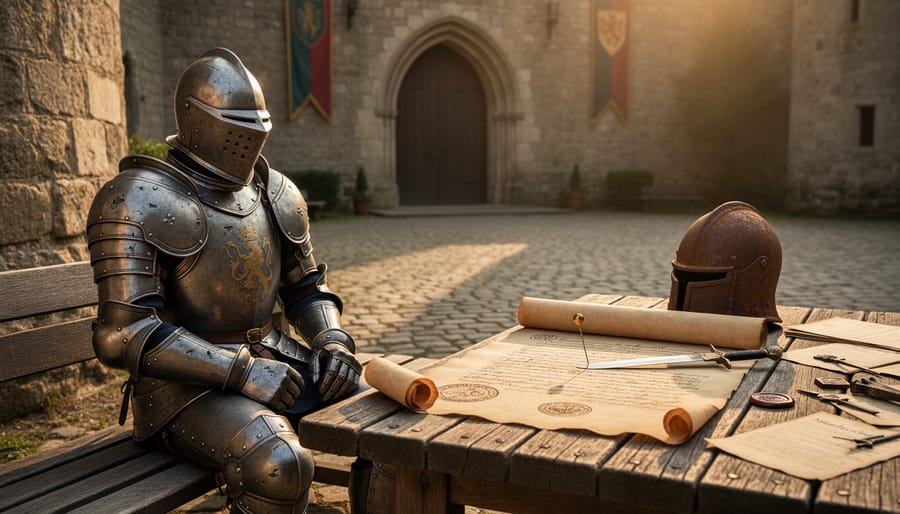
The medieval and Renaissance periods offer historical fiction writers a rich tapestry of drama, from feudal power struggles to the birth of modern thought, and the best novels set in these eras understand that castle walls and court intrigue matter most when they shape individual lives.
Medieval settings allow authors to explore themes of honor, loyalty, and survival in a world where your birth determined your fate and the Church held immense power over daily life. Novels like Ken Follett’s “The Pillars of the Earth” demonstrate how cathedral-building becomes a vehicle for examining class conflict, ambition, and resilience across generations in 12th-century England. The medieval world’s rigid social structures create natural tension, but the most memorable books in this setting avoid making their characters feel like museum pieces, they’re people grappling with love, loss, and difficult choices, just within very different constraints than we face today.
The Tudor court has inspired countless historical novels because it delivered real-life drama that rivals any fiction: Henry VIII’s six wives, political executions, religious upheaval, and the constant threat of the scaffold. Hilary Mantel’s “Wolf Hall” trilogy revolutionized how we think about Thomas Cromwell by presenting him not as a villain but as a shrewd, complex man navigating impossible situations. What makes Tudor fiction so compelling is that readers often know how the story ends, Anne Boleyn will lose her head, the monasteries will fall, yet skilled authors make you hope for different outcomes or at least understand the human cost of these historical turning points.
Several standout titles transport readers convincingly to these transformative centuries:
- “The Name of the Rose” by Umberto Eco, a medieval monastery murder mystery that weaves philosophy and theology into a gripping detective story
- “The Last Kingdom” series by Bernard Cornwell, Viking-age England brought to vivid, brutal life through a warrior caught between two cultures
- “The Birth of Venus” by Sarah Dunant, Renaissance Florence during the Medici era, exploring art, politics, and a young woman’s dangerous passion
- “The King’s Curse” by Philippa Gregory, Tudor succession crises seen through Margaret Pole’s eyes as the old nobility faces a new order
Renaissance settings shift from feudal loyalty to humanism, exploration, and artistic flowering. Authors writing about this period capture the excitement of rediscovering classical knowledge while showing how political machinations continued, just with better poetry. The best Renaissance historical fiction balances the era’s intellectual breakthroughs with personal stories that don’t require a degree in art history to appreciate.
Colonial and Revolutionary Period Narratives
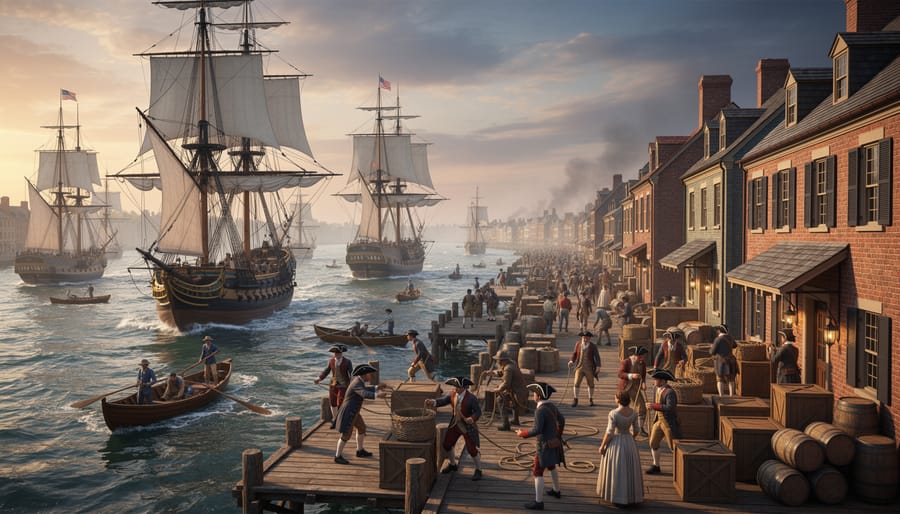
The colonial and revolutionary period offers historical fiction writers a landscape of profound moral complexity and human drama. These novels navigate the tension between grand ideals of liberty and the brutal realities of empire, slavery, and dispossession, creating stories that resonate powerfully with contemporary readers while illuminating how our modern world took shape.
Kathleen Grissom’s *The Kitchen House* exemplifies how novels set in colonial America can explore these contradictions through intimate personal stories. Set on a Virginia plantation in the late 1700s, it follows Lavinia, an Irish indentured servant raised by enslaved people in the kitchen house. Grissom doesn’t shy from the violence and injustice of plantation life, yet she creates deeply human characters on all sides of these systems, making readers reckon with how ordinary people navigated extraordinary moral failures.
For the American Revolution itself, Jeff Shaara’s *Rise to Rebellion* brings the founding fathers down from their pedestals. You get Washington’s self-doubt, John Adams’s prickliness, and Benjamin Franklin’s pragmatism, real men wrestling with whether rebellion is worth the cost. The battle scenes are visceral, but what stays with you is the political maneuvering and personal sacrifices that made independence possible.
Looking beyond America, Amitav Ghosh’s *Sea of Poppies* captures colonial India and the opium trade with stunning scope. Set in 1838, it weaves together characters from vastly different worlds, a disgraced Raja’s widow, an American sailor, a freed slave, all thrown together aboard a ship bound for Mauritius. Ghosh shows how colonial economics didn’t just extract resources; it shattered and recombined entire societies.
These novels succeed because they don’t treat history as settled. They ask hard questions about who pays the price for revolution and who actually gains freedom.
Victorian and Gilded Age Masterpieces
The 19th century offers historical fiction writers a perfect storm of dramatic contrasts: corsets and coal smoke, ballrooms and brothels, industrial revolution and romantic ideals. Victorian England and America’s Gilded Age were periods when fortunes could be made overnight while children worked in factories, when strict social codes masked passionate desires, and when the modern world was being born in fits and starts. The best historical fiction set in this era captures that essential tension between what people showed the world and what simmered beneath.
Sarah Waters has become something of a queen of Victorian psychological fiction with novels like *Fingersmith* and *The Paying Guests*. She takes the Victorian novel’s familiar trappings, orphanages, asylums, grand houses, and uses them to tell stories that the period’s actual writers couldn’t have published. Her work reveals the queer histories and female desires that existed in the margins of respectable society, reminding us that people in every era have lived complex, messy lives regardless of what propriety demanded.
For readers drawn to the American side of things, Amor Towles’s *The Gentleman in Moscow* isn’t strictly Gilded Age, but his earlier work and novels by authors like Lynn Cullen explore the American upper classes during this period of explosive wealth and inequality. These stories often focus on women navigating limited options with intelligence and determination, whether in Newport mansions or New York tenements.
- *Fingersmith* by Sarah Waters, A twisting tale of deception set in Victorian London’s underworld
- *The Alienist* by Caleb Carr, A gripping serial killer hunt through 1896 New York
- *The Essex Serpent* by Sarah Perry, Victorian naturalism meets superstition in coastal England
- *Circling the Sun* by Paula McLain, The unconventional life of Beryl Markham in colonial Kenya
- *The Crimson Petal and the White* by Michel Faber, A sweeping Victorian saga following a London prostitute’s rise
What makes these novels resonate is how they use period detail not as decoration but as the very substance of their conflicts. A woman’s inability to own property isn’t just background information; it drives the plot. The new science of psychology or the telegraph’s arrival isn’t mentioned for colour; it transforms how characters understand their world. The best Victorian and Gilded Age fiction makes you feel the weight of a world changing too fast for some and not fast enough for others.

World Wars and Mid-20th Century Voices
The wars that defined the 20th century have inspired some of the most powerful historical fiction ever written, and these novels don’t just recount battles, they explore how ordinary people survived, resisted, and rebuilt their lives amid unimaginable circumstances.
WWI fiction often focuses on the disillusionment that followed the initial patriotic fervor. *All the Light We Cannot See* by Anthony Doerr, though centered on WWII, captures this era’s spirit of individuals caught in machinery beyond their control. For pure WWI storytelling, *Birdsong* by Sebastian Faulks remains unforgettable, weaving a love story through the trenches of France with prose that makes you feel the mud and terror.
WWII fiction dominates this period, and for good reason, the moral stakes, the scope of human suffering, and the acts of courage provide endless material. *The Nightingale* by Kristin Hannah follows two French sisters who resist the Nazi occupation in different ways, one through quiet acts of defiance, the other through dangerous work with the Resistance. It’s devastating and beautiful in equal measure. *The Book Thief* by Markus Zusak, narrated by Death itself, shows war through a young girl’s eyes in Nazi Germany, proving that even in darkness, words and stories matter.
For perspectives beyond the European theater, *Pachinko* by Min Jin Lee spans generations of a Korean family living in Japan from the early 1900s through the late 20th century, showing how colonialism, war, and discrimination shaped their lives. It’s a masterclass in multi-generational storytelling.
The post-war period gets less attention but offers rich territory. *Brooklyn* by Colm Tóibín captures the immigrant experience in 1950s America with quiet precision, while *The Women of Brewster Place* by Gloria Naylor explores the lives of Black women in the 1960s with raw honesty.
What makes these novels essential is their refusal to sanitize history. They show war’s impact on families, communities, and individual psyches, the trauma that lingers long after the fighting stops. They remind us that behind every statistic were real people making impossible choices, finding small moments of joy, and somehow carrying on.
Recent History Brought to Fiction
Historical fiction set in the past fifty to seventy years occupies a fascinating space, close enough that many readers have personal or family connections to these events, yet distant enough to offer the perspective that only time provides. These novels transform the history we thought we knew into something richer and more complex.
The Civil Rights Movement has inspired powerful fiction that goes beyond textbook timelines. Novels like *The Nickel Boys* by Colson Whitehead illuminate the brutal realities of segregation through intimate, devastating personal stories. Similarly, fiction exploring the Vietnam War era, from both American and Vietnamese perspectives, reveals the human cost behind political decisions and media coverage that shaped a generation.
The Cold War period offers writers fertile ground for exploring ideological conflicts and divided nations. Stories set around the fall of the Berlin Wall in 1989 capture the hope, fear, and uncertainty of that pivotal moment. Fiction about apartheid South Africa, the AIDS crisis of the 1980s and 90s, and post-9/11 America all bring fresh nuance to events that shaped our current world.
What makes recent history particularly compelling in fiction form is how these novels challenge our assumptions. We think we remember these periods, but fiction reveals the overlooked voices, the women, the marginalized communities, the everyday people whose experiences rarely made headlines. These stories help us understand how yesterday’s struggles connect to today’s challenges.
If you want to choose your next read from this era, consider which period resonates with your own family history or curiosity. For those new to the genre, it can help to start with the basics before diving into more complex narratives about recent events.
Where to Start Your Historical Fiction Journey
The best way to begin is by following your own curiosity. Think about history classes that captured your imagination, historical places you’ve visited, or time periods you’ve always wondered about. If you loved studying ancient Rome, start there rather than feeling obligated to begin with whatever’s currently popular. Your genuine interest will carry you through even the densest historical detail.
Consider starting with widely recommended historical fiction that balances accuracy with accessibility. Books like “All the Light We Cannot See” or “The Nightingale” offer immersive historical settings without requiring extensive background knowledge. These gateway novels tend to emphasize character and story while weaving in historical context naturally.
Pay attention to whether you prefer sweeping epics or intimate character studies. Some readers thrive on multi-generational sagas spanning decades, while others connect more deeply with focused narratives following one person through a specific moment in history. There’s no wrong preference, just different storytelling approaches.
Don’t worry too much about historical accuracy when you’re starting out. A compelling story that sparks your interest in a period is infinitely more valuable than a meticulously researched book that bores you. You can always explore more academic histories later if a novel ignites your curiosity about its era.
The beauty of historical fiction is that it lets us live a thousand different lives across countless eras, all from the comfort of our favorite reading spot. Yet these novels do more than transport us elsewhere. They connect us to the joys, struggles, and triumphs that unite humanity across time.
I hope these examples spark your curiosity to explore periods you’ve never considered or deepen your appreciation for eras you already love. Each book is a doorway to another world, another perspective, another truth about what it means to be human.
And here’s a wonderful side effect I’ve discovered: historical fiction has a way of inspiring real-world adventures. Reading about Georgian Bath or wartime Paris often plants seeds for future travels, adding layers of meaning when you finally walk those same streets your favorite characters once inhabited, even if only in imagination.
Now I’d love to hear from you. What historical novels have transported you most completely? Which time periods are calling to you next? The conversation doesn’t end here. After all, the best part of being a reader is sharing these discoveries with fellow travelers through time.
Happy reading, and may your next historical adventure be unforgettable.