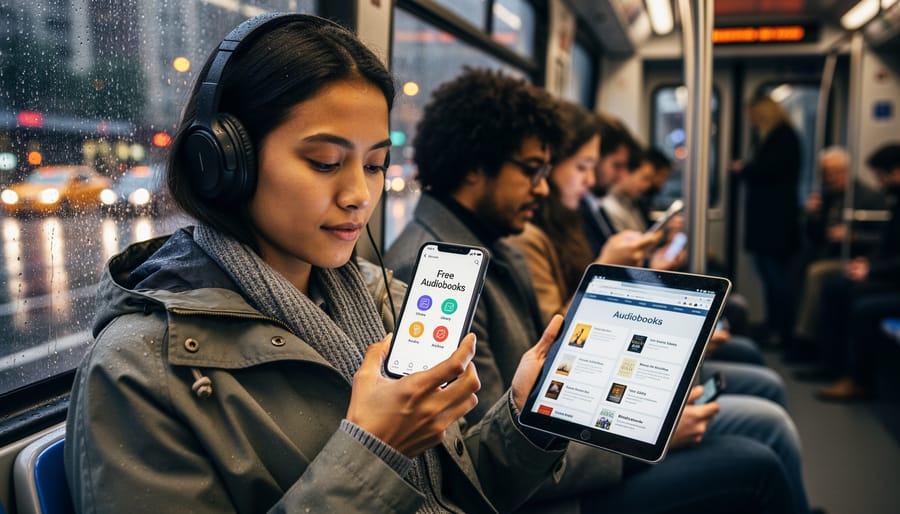
The Internet Archive is a worthwhile free audiobook source for Canadian readers, but it’s a treasure chest for browsing, not a replacement for your library card. Libby and Hoopla are still the more dependable way to get recent bestsellers, while the Archive shines for older, odd, and out-of-the-way listens. Our experience reading across all of them is that the Archive rewards patience and curiosity, and that’s the main reason it earns a spot on your rotation rather than the top of it.
Here’s the catch worth knowing up front. Some Internet Archive items use licensed or controlled borrowing, and availability can vary by individual title and by region. That means the audiobook you spotted may behave differently from the next one, and what a reader in Halifax sees may not match what turns up elsewhere. We’ve learned to check each title before settling in, the way you’d glance at a trail map before heading into the Rockies.
If you’ve ever wondered whether audiobooks count as real reading, you’re in good company, and the answer is a happy yes. So the question isn’t whether to listen, it’s where. Below, we compare the Internet Archive with Libby, Hoopla, and Open Library so you can pick the right source for your next commute, road trip, or rainy-day armchair escape.
The Quick Verdict: Internet Archive, Libby, Hoopla, and Open Library at a Glance
Short on time? Here’s the lay of the land. We lined up the four services side by side so you can see where each one fits before diving deeper.
| Service | Type of borrowing | Regional availability | Check title by title? |
|---|---|---|---|
| Internet Archive | Some items open, others licensed or controlled borrowing | Can vary by title and region | Yes, always |
| Libby | Licensed or controlled borrowing through your library membership | Tied to your library’s offerings | Yes |
| Hoopla | Licensed or controlled borrowing through your library membership | Tied to your library’s offerings | Yes |
| Open Library | Licensed or controlled borrowing | Check each title | Yes |
A quick word on how to read this. Nothing here is a blanket promise. The table reflects only the general points we could verify: some Internet Archive items use licensed or controlled borrowing, and Libby, Hoopla, and Open Library offer that style of lending too. What the Internet Archive has available can differ from one title to the next, and from one region to another.
So treat the table as a starting map, not a guarantee. Your best habit is simple: look up the exact audiobook you want on each service before you get your heart set on it. Specifics like loan windows and supported formats are worth confirming on the service itself.
What Each Option Actually Is
The Internet Archive: A Free Digital Library with Fine Print
The Internet Archive is a nonprofit digital library, and that’s the first thing to know about it. It’s a big, wandering space, a bit like a secondhand bookshop that never closes. When we poked around, we found that some items are open to anyone who wants to listen, while others use licensed or controlled borrowing, which simply means access is managed by rules rather than handed out freely.
Those rules aren’t uniform. They can differ from one title to the next, and they can shift depending on where you are. So a book that’s easy to reach for one listener might be restricted for you. That’s the fine print, and it’s why we always look at the individual title and our own region before getting our hopes up, rather than assuming the whole collection works the same way.
Libby and Hoopla: The Library-Card Route
Libby and Hoopla are the library-card route, and in our experience they feel pleasantly familiar. Both are apps that connect to your public library membership, so you sign in with your card instead of paying for a separate subscription. That’s what “licensed borrowing” means in practice: the library has arranged the rights to lend a title, and the app hands it to you under those terms.
That structure is why new releases in genres like fantasy and romance tend to turn up here more often than in free collections. Each title still follows its own lending rules, though, so we always check before getting our hopes up. Libby, Hoopla, Open Library, and some Internet Archive items all use licensed or controlled borrowing, which makes this a family of options rather than a single rulebook. A library card is the one thing that unlocks the whole route.
Open Library: The Book-Lover’s Gateway
Open Library is the bookish cousin in this family, and it’s easy to confuse with the Internet Archive because the two sit in the same digital-lending neighbourhood. Like Libby, Hoopla, and some Internet Archive items, Open Library offers licensed or controlled borrowing, which simply means a title is lent out under specific rules rather than handed over freely to everyone. When we browsed it alongside the others, we treated it as one more door worth trying, not a replacement for any of them. Check each title’s borrowing status before you settle in.
Head-to-Head: How They Compare for Canadian Listeners
Cost and Access: What ‘Free’ Really Means
“Free” can mean two different things here, and mixing them up is where most of the frustration starts. Browsing the Internet Archive costs nothing, and you can wander through its shelves without a card or a login. Borrowing is a different story. Some Internet Archive items use licensed or controlled borrowing, so the title is free to you but still sits behind rights rules.
Libby and Hoopla work through your public library membership, so your card is the price of entry. Open Library also uses licensed or controlled borrowing for some titles.
In our experience, “free” is best read as “no cost, but not always no strings.” Check the individual title and your region before you settle in.
Region Matters: Why a Title Might Be There for Someone Else but Not for You
A friend once raved about a free audiobook she’d found on the Internet Archive, so I settled in with tea, ready for a cozy listen. Then… nothing. The same title simply wasn’t available to me. I tried it a couple of different ways, but the answer was the same.
That’s the quirk worth knowing. Borrowing availability on the Internet Archive can vary by individual title and by your region, and some items rely on licensed or controlled borrowing. So a recommendation that works beautifully for someone elsewhere may not work for you here in Canada.
It isn’t a sign you’re doing something wrong. It’s just how rights work, so treat any tip from a faraway friend as a lead to check rather than a promise.
Check Before You Commit: A Title-by-Title Routine
Here’s the habit I’ve settled into, and it takes about a minute per book. Before I get excited about a listen, I open that specific title’s page on the Internet Archive and look at what it actually offers. Some items are open to everyone, while others use licensed or controlled borrowing, so the rights for one book tell you nothing about the next.
Then I check whether the borrowing option is there for me, in my region. Availability can vary by individual title and region, so a book that works for a friend elsewhere may not work for you.
If a title is locked or missing, I don’t sulk. I search for it in Libby, Hoopla, or Open Library, since those offer licensed or controlled borrowing too. As for loan windows and supported formats, I confirm those on the service itself rather than assuming.
Key Details to Keep in Mind
A few facts hold steady across everything above. Some Internet Archive items use licensed or controlled borrowing, so “free” doesn’t always mean “unrestricted.” Whether you can borrow a given title can change depending on the book itself and where you’re located. Libby, Hoopla, and Open Library also offer licensed or controlled borrowing, which means the rules are never identical from one service to the next.
What we can’t tell you is just as useful to know. Missing titles, loan windows, and supported formats are details to confirm on each service, because they’re easy to get wrong from memory and they matter once you’re ready to press play.
Where the Internet Archive Shines and Where It Falls Short
Here’s the thing about the Internet Archive: it can feel like wandering into a secondhand bookshop where the shelves rearrange themselves depending on where you’re standing. Some days you strike gold. Other days you leave with nothing but a stack of browser tabs.
In our hands-on browsing, the strengths and the limits showed up side by side:
Pros
- Free access to some items, with no library card needed to browse.
- A pleasant place to poke around for older fiction and other long-loved reads.
- A nice complement to library apps instead of a replacement for them.
Cons
- Availability can vary by individual title, so no search is guaranteed to pay off.
- Some items use licensed or controlled borrowing, which limits what you can do.
- What you see can depend on your region.
- You need to check each title’s status before getting your hopes up.
Genre makes a real difference here. Classics and older fiction tend to feel at home in free collections, and that’s where the Archive often feels most generous. If your idea of a perfect afternoon is a gothic novel and a cup of tea, it’s a lovely place to start looking.
Newer releases are a different story. Fantasy and romance readers chasing current series often find the Archive’s controlled borrowing doesn’t line up with what’s on their wish list, and that’s usually when Libby, Hoopla, or Open Library earn their keep. Those services also offer licensed or controlled borrowing, so they’re a natural next stop. If you’re deciding how to build a fantasy listening list, our fantasy audiobook tips can help you plan what to hunt for where.
None of this is a knock against the Archive. These are general tendencies, not promises, and rights can vary from one title to the next. Treat it as a bonus shelf, not your only one, and you’ll rarely be disappointed.
Which Should You Choose? Matching the Service to the Kind of Reader You Are
Here’s how I’d match the service to the kind of reader you are. No single app wins every mood, so think about what you’re in the mood to listen to before you open anything.
If you’re a classics wanderer, the Internet Archive is a lovely place to start. Older fiction tends to feel at home in free collections, and I like pairing a classic with a road trip, letting a Victorian novel keep me company on the highway the way a good travel companion would. If you’re a new-release chaser, library apps usually make more sense, since licensed borrowing is where newer titles tend to show up. And if you’re a cozy romance binge-listener, a library card plus a few romance picks saved to a wish list is a comfortable routine. Fantasy series devotees, meanwhile, often do best with library apps for the long, ongoing sagas, then use free collections for older gems.
Here’s a quick “choose this if…” cheat sheet:
- Choose the Internet Archive if you love classics and want a free extra to browse, checking each title’s borrowing rules first.
- Choose Libby if your public library card is your main ticket and you want licensed borrowing through your local branch.
- Choose Hoopla if you want another library-card route to licensed titles when your first choice isn’t available.
- Choose Open Library if you enjoy the broader world of digital lending and don’t mind controlled borrowing.
My best tip is to combine them rather than pick a single winner. Start with the Internet Archive for a classic, then check Libby and Hoopla for anything newer. Because availability can vary by title and region, keep a short backup list so you’re never stuck without something to press play on.
Common Questions About Free Audiobooks for Canadian Readers
Is the Internet Archive a good free audiobook source?
It’s a worthwhile free extra, especially if you enjoy classics. Some items there use licensed or controlled borrowing, so what you can actually listen to depends on the individual title.
Can I borrow any audiobook on the Internet Archive?
Not necessarily. Borrowing availability can vary by title and by region, so it’s smart to check each book’s page before you get your heart set on it.
Why can’t I borrow a title that someone else can?
Availability on the Internet Archive can differ by individual title and region, which means a friend elsewhere may see an option you don’t. It’s a bit like a bookshop stocking different shelves in different cities.
Do I still need Libby or Hoopla, and is Open Library the same thing?
Libby and Hoopla also offer licensed or controlled borrowing through your library membership, so they pair nicely with the Internet Archive rather than being replaced by it. Open Library is its own service with licensed or controlled borrowing, so check each one separately.
If you’re building a listening habit, treat these services as a team rather than rivals. I like keeping a running list of titles and noting which service might carry each one, which makes it easier to read more without hitting dead ends. Over time, that list becomes a handy map, and it’s even good for planning a listen-along for your next trip to one of those literary destinations you’ve been dreaming about.
So here’s where I’ve landed after all that browsing. The Internet Archive is a lovely free extra, the sort of place where an old classic turns up just when you need something for a long walk. But it’s a supplement, not the whole shelf. Some items use licensed or controlled borrowing, and availability can shift by title and by region, so a quick check before you get your heart set is always worth it.
For everything else, lean on your library card. Libby and Hoopla are there for the newer releases, the series you’re bingeing, and the cozy romances you want ready on demand.
Why not start a listening list this week? Put one free classic on it, one library-app pick, and let your mood choose between them. Then tell us what you found. Which free listens have surprised you, and which ones kept you company on a long drive or a rainy afternoon?