
Yes, survival multiplayer servers can deliver storytelling that rivals the best fiction books, but only if you choose communities where narrative architecture takes precedence over combat mechanics. Over the past few years SMP (Survival Multiplayer) servers have moved well beyond simple sandbox experiences, and the most story-focused of them now build richly layered worlds where player agency meets carefully crafted lore, character arcs unfold across months, and emotional stakes feel startlingly real. The parallel is worth taking seriously: When deciding which SMP server to join, you’re essentially choosing your next literary adventure.
For a player, narrative depth is easier to judge from a server’s rules, lore, moderation approach, reset policy, and the way its community describes collaborative play than from a promise that every SMP will tell the same kind of story.
The question isn’t whether these servers can tell good stories. The question is whether you’re ready to experience narrative in a fundamentally different way. Traditional novels offer the elegant control of an author’s vision, every word sculpted and intentional. Survival servers offer something wilder: collaborative storytelling where you’re simultaneously reader, character, and co-author. On a lore-heavy server, the collapse of a months-long political alliance can land with real weight, not because a writer scripted it, but because real people made choices that felt inevitable and heartbreaking.
The literary merit is there, though it manifests differently. You won’t find the precise language of a Kazuo Ishiguro novel, but you will find complex themes, moral ambiguity, and character development that can match anything on your bookshelf. The catch? Finding quality takes effort. That’s exactly why this comparison is especially relevant, as these servers don’t have Amazon reviews or Goodreads ratings to guide you.
At-a-Glance: Story-Driven Servers vs. Classic Novels

Set story-driven servers beside traditional fiction and the comparison isn’t as straightforward as you might expect. Each medium excels in different storytelling dimensions, and understanding where they diverge helps you choose which narrative experience suits your current mood.
| Storytelling Element | Survival Multiplayer Servers | Traditional Fiction | Key Difference |
|---|---|---|---|
| Character Development | Emergent, player-driven arcs with unpredictable growth | Carefully crafted trajectories with intentional arcs | Agency vs. authorial design |
| World-Building | Living, explorable environments you help shape | Richly detailed but static settings | Interactive participation vs. guided discovery |
| Plot Structure | Organic, community-driven with no guaranteed resolution | Structured narratives with deliberate pacing | Spontaneity vs. cohesion |
| Emotional Investment | High stakes through real relationships and consequences | Deep connection through prose and perspective | Lived experience vs. empathetic imagination |
What surprises most book lovers is how these differences create complementary rather than competing experiences. Servers deliver the thrill of co-authoring a story in real time, where your decisions genuinely matter and friendships carry actual weight. Fiction offers the satisfaction of a complete, polished vision where every detail serves a larger purpose. Readers tend to want each for different reasons, sometimes you want to shape a world, other times you want a master storyteller to transport you.
What We’re Really Comparing: Understanding Each Storytelling Medium

Survival Multiplayer Servers: Interactive Narrative Worlds
Picture joining a Minecraft server where every player is a member of a crumbling medieval kingdom, each person’s actions rippling through an ongoing political drama that’s been unfolding for months. That’s the essence of story-driven survival multiplayer servers, persistent online worlds where narrative emerges from player decisions rather than scripted cutscenes.
These servers function as collaborative storytelling platforms built on survival game frameworks. Players don’t just gather resources and build shelters; they inhabit characters with backstories, motivations, and relationships. Server administrators establish lore frameworks, a post-apocalyptic wasteland, a fantasy realm at war, a space colony on the brink, and players flesh out the world through their interactions. Some servers enforce roleplay strictly, requiring players to stay in character and justify every action narratively. Others blend survival gameplay with optional story participation.
The magic happens in the emergent narratives. A casual conversation between two players mining ore might spark a trade dispute that escalates into factional warfare. A random act of kindness toward a struggling new player might evolve into a mentor relationship that shapes both characters’ arcs. Unlike authored fiction, these stories have genuine stakes because the time players invest in building their characters and communities matters deeply.
Communities like DreamSMP have demonstrated how structured storytelling systems, scheduled events, admin-guided plot points, content creator collaborations, can elevate server narratives from random interactions to coherent, emotionally resonant sagas with dedicated audiences. The line between playing a game and living a story blurs completely.
Published Fiction: The Traditional Narrative Experience
Published fiction remains the most polished form of storytelling humanity has refined over centuries. When you crack open a novel, you’re entering a world that’s been meticulously shaped by an author who controls every narrative element, from the arc of character growth to the rhythm of revelations that land at precisely the right emotional moment.
Traditional fiction keeps drawing readers back because it delivers something interactive narratives struggle to match: narrative cohesion. An author sees the complete story from beginning to end, planting thematic seeds in chapter two that bloom into meaning in the climax. Every scene serves a purpose, every character interaction moves the plot forward with intention. There’s no meandering, no accidental plot holes, no dead-end storylines that peter out because the person driving them logged off.
The prose itself is another distinction. Published fiction offers language that’s been refined through multiple drafts, shaped by editors, polished until each sentence carries weight. You get metaphors that resonate, dialogue that reveals character while advancing plot, descriptions that transport you without a single pixel. The writing quality remains consistent because one voice (or a small team) maintains control throughout.
Traditional fiction also guarantees closure. You invest in characters knowing their arcs will complete, conflicts will resolve, and themes will reach conclusions the author intended. That contract between writer and reader, the promise of a complete, purposeful narrative experience, defines what makes novels, novellas, and short stories such reliable vessels for storytelling.
Storytelling Elements Compared: How Each Medium Builds Narrative
Character Development and Emotional Investment

In published fiction, character development follows an author’s careful blueprint, each revelation, flaw, and transformation timed to maximize emotional payoff. You watch protagonists evolve through curated moments, much like observing actors deliver polished performances in movie adaptations. The attachment feels intimate but predetermined; you’re witnessing someone else’s vision of growth.
Survival multiplayer servers flip this dynamic entirely. Here players craft their own character arcs through genuine choices and unscripted consequences. When your avatar loses everything in a betrayal or gradually transforms from loner to community leader, that evolution emerges from actual decisions under pressure, not narrative necessity. The attachment runs deeper precisely because you authored it, your character’s courage wasn’t written, it was discovered in the moment.
This creates a paradox book lovers navigate differently. Traditional fiction offers refined emotional arcs where every beat lands with intention. Multiplayer narratives deliver messier, rawer growth that resonates because it happened to you, not a protagonist you’re observing. Some readers crave the artistry of crafted character journeys; others hunger for the authenticity of becoming someone through play rather than reading about transformation. Neither attachment is superior, they simply activate different emotional registers, one through observation and empathy, the other through embodiment and agency.
World-Building and Setting Immersion
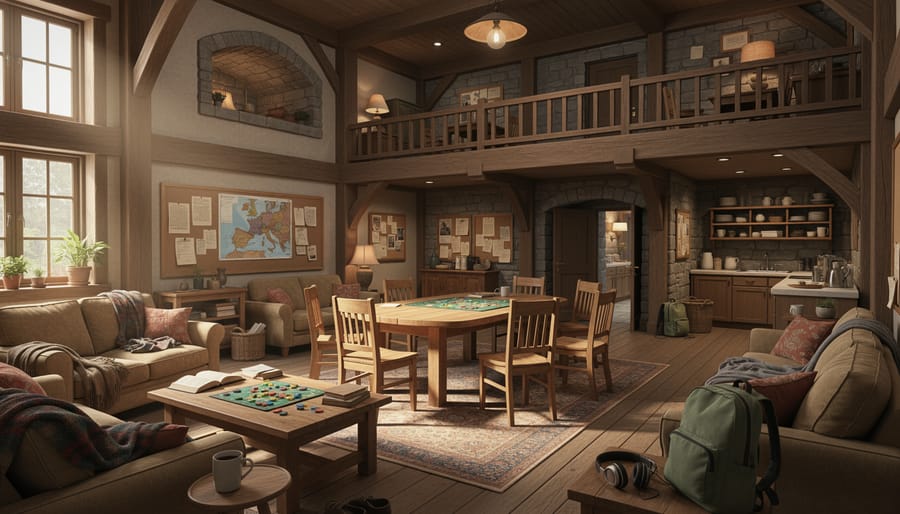
Published fiction constructs worlds through carefully chosen words, layering descriptions across chapters until readers can visualize foggy moors or bustling marketplaces in their mind’s eye. We turn pages and the author guides our gaze, what we notice, when, and how deeply. Historical fiction masters this craft, building entire eras through sensory detail and cultural texture, though we experience these worlds secondhand through the author’s lens.
Survival multiplayer servers flip this entirely. On these servers the world surrounds you in three dimensions, you walk through forests that other players planted, discover ruins built by communities months earlier, stumble across hidden shrines inscribed with player-written lore. The environment responds: weather changes, structures decay, territories shift ownership. Instead of reading about a contested border, you stand on it while negotiations happen in real-time chat.
The most striking feature is collaborative creation. One player writes the founding myth for a desert temple. Another builds the architecture. A third organizes pilgrimages. The world accumulates history organically rather than arriving fully formed. Some servers maintain lore wikis documenting their locations, each with player-authored backstories woven into the landscape itself.
The trade-off? Fiction’s worlds possess coherent vision and polished consistency. Server worlds feel lived-in but messy, their lore sometimes contradictory, their geography shaped by practical needs alongside aesthetic choices. One offers artful curation; the other offers authentic, imperfect collaboration.
Plot Structure and Narrative Pacing
Traditional fiction gives you the satisfying architecture of a complete story: rising action, crisis, resolution. An author shapes every beat, controls the pace, plants foreshadowing that will pay off three hundred pages later. You know the narrative is heading somewhere deliberate, even if you don’t see how. Server narratives work differently, they unfold more like serialized Victorian novels or improvised theatre, where the ending isn’t written yet and players co-author the journey.
Server plots often develop through what administrators call “narrative arcs”, planned story frameworks that bend around player choices. A server might establish a brewing faction conflict or approaching environmental catastrophe, setting the stage while letting players determine how tensions escalate and resolve. A community might structure its year around seasonal story beats, much like television episodes, while the actual plot emerges from player actions within those constraints. Characters die permanently because of decisions made in real time. Alliances shift. The “ending” nobody predicted becomes canonical history.
This creates pacing that traditional fiction rarely attempts. A server plot might simmer for weeks of quiet character moments, then explode into frantic activity when players trigger a crisis. Compare that to a thriller’s controlled tension or space opera‘s carefully orchestrated battles, both shaped for maximum impact. Server narratives trade that polish for immediacy. You experience the story at life speed, which means genuine surprise but occasional narrative drift when player schedules don’t align or interest wanes.
Dialogue and Interpersonal Storytelling
In traditional fiction, dialogue feels like watching virtuoso performers on stage, each line polished, every exchange building toward a narrative purpose. Authors revise conversations dozens of times to capture rhythm, subtext, and character voice just right. The result is prose that sings, where seemingly casual banter carries thematic weight and every word choice matters.
Server interactions operate more like improv theatre. When your character confronts a rival over stolen supplies, neither player knows exactly what they’ll say next. Relationships evolve through these spontaneous exchanges, trust built through fumbled apologies, betrayals revealed in heated accusations that weren’t scripted but felt devastatingly real because they emerged from actual player decisions and emotions.
The trade-off cuts both ways. Server dialogue lacks the elegance of edited prose; you’ll encounter awkward phrasing, players breaking character, and conversations that meander without narrative payoff. But there’s visceral authenticity when another player’s voice cracks with genuine frustration during a tense negotiation, or when laughter erupts organically during a shared crisis. These moments can’t be replicated through authorial craft, they exist only because real humans are reacting to each other in real time.
Traditional fiction gives you perfect dialogue. Multiplayer servers give you real dialogue. Each creates emotional truth through entirely different mechanisms, and neither fully replaces what the other offers.
Themes and Deeper Meaning
In a novel, the author architects themes with surgical precision. Margaret Atwood embeds warnings about surveillance and control throughout The Handmaid’s Tale; every chapter reinforces her intended message. The reader receives the theme as the author envisioned it, polished, deliberate, complete.
Survival multiplayer narratives work differently. Themes emerge organically from what players actually do and value as a community. Servers can develop powerful explorations of trust, sacrifice, and collective responsibility not because an author scripted them, but because players confronted genuine moral dilemmas together. When a community debates whether to exile a member who hoarded resources during a crisis, they’re living an ethics problem rather than reading about one.
This creates unexpected thematic richness. A server might accidentally surface profound questions about grief when players mourn a character’s permanent death, or illuminate power dynamics when factions negotiate resource distribution. The themes aren’t always coherent, some sessions feel scattered, but the ones that land hit differently because you participated in creating them.
Traditional fiction offers thematic mastery: every symbol connects, every motif resolves. Multiplayer offers thematic discovery: you don’t know what the story means until you’ve lived it alongside others. Fiction gives you the author’s truth; servers help communities find their own.
The Strengths and Limitations of Each Storytelling Approach
Published fiction and survival multiplayer servers each excel in specific storytelling dimensions while facing inherent constraints shaped by their fundamental nature. Traditional novels offer complete narrative control, polished prose refined through drafts and editorial oversight, and the ability to compress or expand time precisely as the story demands. An author can craft the perfect metaphor, deliver a devastating plot twist at exactly the right moment, and ensure every sentence serves the larger narrative arc. You finish a well-written novel knowing you’ve experienced a cohesive artistic vision, beginning to end.
Survival multiplayer servers, in contrast, deliver spontaneity and genuine emotional stakes that no authored narrative can replicate. When a friend’s character dies permanently, you feel real grief. When a community fractures over conflicting values, the betrayal carries weight because actual relationships hang in the balance. The stories emerge organically from player agency, creating narrative moments no single author could have scripted, the unexpected alliance, the dramatic rescue, the slow-burn character transformation witnessed over months rather than chapters.
Pros
- Traditional fiction provides narrative certainty, polished language, and complete story arcs you can revisit identically.
- Published novels require no time coordination, deliver consistent quality, and work perfectly for solitary reading experiences.
- Multiplayer servers create authentic emotional investment through real relationships and irreversible consequences.
- Interactive narratives offer true agency, emergent storytelling, and the thrill of co-authoring rather than observing.
Cons
- Traditional fiction lacks agency, you watch predetermined events unfold without influence over outcomes.
- Published novels compress complex character relationships and community dynamics into limited page counts.
- Multiplayer servers require time synchronization, consistent participation, and tolerance for narrative messiness.
- Interactive narratives risk uneven quality, unresolved plotlines, and vulnerability to community drama disrupting the story.
The limitations stem from each medium’s core structure. Fiction trades spontaneity for craft, ensuring quality at the cost of player participation. You’ll never argue with a protagonist’s choice because you aren’t making it. Multiplayer servers trade polish for authenticity, embracing emergent chaos at the risk of narrative incoherence. A carefully planned server storyline might derail when key players disappear mid-arc, leaving plot threads dangling.
The choice isn’t about which storytelling approach is objectively superior, it’s about matching medium to mood. Sometimes you crave the assurance of an expertly constructed narrative. Other times, you want the messy, thrilling unpredictability of co-creating a story where consequences feel genuinely earned because you and your community actually lived them.
Which Servers Actually Deliver Fiction-Quality Narratives in 2026
A word on what this section does not do: it names no specific servers or communities. Server rosters and their narrative quality change constantly, and any list would be out of date before you acted on it. What it can do is point you toward what to look for.
Across narrative-driven survival communities, certain patterns separate genuinely story-rich servers from those merely claiming the label. The best narrative experiences share recognizable qualities rather than marketing promises.
Look for communities with established lore documentationwikis, timelines, character databases that players maintain collaboratively. If a server has years of accumulated history that newcomers study before joining, you’re seeing evidence of sustained narrative investment. The depth shows in details: faction histories that span server “seasons,” character genealogies, documented events that shaped the world’s current state.
Active roleplay enforcement distinguishes serious narrative servers from casual ones. Communities worth your time typically require character applications, maintain in-character communication rules in certain zones, and have systems for resolving conflicts through story rather than pure mechanics. You’ll often find dedicated storytelling staff, lore keepers, event coordinators, world-builders, who function like collaborative editors shaping the ongoing narrative.
The strongest narrative communities we encountered typically clustered around a few recognizable approaches:
- Medieval fantasy roleplay servers with detailed political systems, noble houses, and economic progression tied to character stories rather than pure grinding
- Post-apocalyptic survival communities where scarcity drives genuine moral dilemmas and player factions write their own evolving philosophies
- Historical simulation servers that recreate specific eras with period-appropriate technology, social structures, and cultural roleplay expectations
- Custom lore worlds built entirely by the community with original mythology, magic systems, and cultures developed through collaborative worldbuilding
- Hybrid narrative servers that blend structured storytelling seasons (with planned arcs) and emergent player-driven plots between major events
What separates fiction-quality narrative servers from ordinary ones is consequence persistence. Actions matter. Betrayals are remembered. Alliances shift politics. Characters die permanently or face meaningful setbacks. The world changes based on player choices, creating the narrative weight that book lovers recognize as genuine storytelling.
Community size matters less than community culture. A small, active community can sustain a denser story than a much larger one. Look for servers where players reference past events naturally, where newcomers ask about lore before asking about mechanics, where the community Discord discusses character motivations as much as gameplay strategies.
The best way to identify quality narrative servers? Read their community forums and watch their content. Players creating fan art, writing character journals, discussing plot developments, these signal a community treating the experience as collaborative fiction rather than a game with roleplay flavoring.
Who Should Choose Which: Finding Your Ideal Narrative Experience
You’ll Love Survival Server Narratives If…
You’ll find your sweet spot in narrative multiplayer worlds if you’ve ever wished you could step inside a story and actually influence how it unfolds. The players who thrive in these environments are the ones who already seek agency in their fiction, those who’ve dog-eared every page of choose-your-own-adventure books, who build elaborate backstories for their tabletop RPG characters, or who’ve yelled at novel protagonists for making obviously terrible decisions.
If you’re someone who reads character-driven fiction and mentally rewrites scenes to explore what would’ve happened if the hero chose differently, you’ll love the freedom these servers provide. The same impulse that draws you to short stories with open endings translates beautifully to emergent narratives where consequences genuinely branch based on your choices.
Readers who already enjoy collaborative storytelling formats, book clubs where you discuss character motivations, fanfiction communities, or even writing workshops, tend to take naturally to the give-and-take of multiplayer narratives. You’re comfortable with improvisation, unfinished story threads, and the delightful messiness of collective creativity. If you value experiencing a story over consuming a perfectly polished product, these servers deliver something traditional fiction simply can’t match: genuine narrative surprise where even the storytellers don’t know what happens next.
Stick with Traditional Fiction If…
Traditional fiction remains the superior choice if you cherish the solitary ritual of reading. There’s something irreplaceable about curling up with a novel, controlling your own pace, and experiencing a story exactly as the author envisioned it, complete, polished, and yours alone. Some readers never warm to the unpredictability of collaborative storytelling, and that’s entirely valid.
You’ll likely prefer published fiction if you value narrative closure. Novels deliver complete arcs with satisfying resolutions, whereas multiplayer server stories can dissolve mid-plot when players leave or communities fracture. If cliffhangers without guaranteed conclusions frustrate you, stick with bound pages.
The prose itself matters enormously to many book lovers. Traditional fiction offers carefully crafted language, metaphors that shimmer on the page, and sentences you’ll want to reread for their beauty alone. Server narratives, even excellent ones, rely on improvised dialogue and spontaneous description that rarely achieve literary polish.
Control over your reading environment is another compelling reason. Fiction doesn’t require coordinating schedules, managing social dynamics, or navigating community drama. You read when you want, pause mid-sentence without disappointing teammates, and never worry about someone else’s roleplay choices derailing your experience. For readers who view stories as personal sanctuaries rather than collaborative ventures, traditional fiction remains unmatched.
Why Not Both? Building a Hybrid Reading Life
The best news? You don’t have to pick one medium and abandon the other. Alternating between novels and narrative servers can deepen your appreciation for both: the polished craft of fiction makes elegant improvisation in multiplayer dialogue easier to notice, while the agency of a server makes it clearer how skilfully authors guide a reader’s emotions through fixed narratives.
Start small if you’re curious about narrative gaming. Lurk as an observer on a roleplay server for a week before creating a character, much like you might sample a chapter before committing to a book. Choose servers with welcoming newbie programs that explain their lore through in-game libraries or guided tours. Set boundaries: dedicate specific evenings to server stories while protecting your traditional reading time, helping you read more without sacrificing either habit.
One workable rhythm is novels in the gaps of the day and a server community a couple of evenings a week. The key is treating both as valid storytelling experiences rather than letting one crowd out the other, they satisfy different narrative hungers, and your reading life grows richer when you honour both.
What Crossing Between Stories and Servers Teaches
Crossing between the pages of a novel and the living narratives of survival servers changes how storytelling itself looks. It is tempting to treat them as separate experiences, reading as a solitary, immersive escape and gaming as a completely different category of entertainment. The surprise is how close they sit: the emotional weight of watching a character developed over months make a crucial moral choice in a server is not far from the ache that lingers for days after a novel’s last page. Both mediums create that profound reader investment through different paths: one through the precision of authorial craft, the other through the messiness and authenticity of collaborative creation.
The most valuable lesson has been understanding that narrative certainty and narrative possibility both have profound worth. Published fiction offers the comfort of knowing a skilled author has shaped every element toward meaning, that the journey has been tested and refined. Server narratives offer something equally compelling: the electric uncertainty of not knowing where the story leads because nobody does, the thrill of co-authorship with strangers who surprise you. Reading novels makes for a better collaborator in server stories, because pacing, character arcs and thematic development become legible. Conversely, participating in emergent narratives sharpens an appreciation of fictional characters who exercise genuine agency rather than serving as author puppets.
Neither medium diminishes the other. Between them they show that storytelling is far larger and more varied than any single form can contain.
What Each Option Is
Before we can compare these narrative experiences meaningfully, let’s define what we’re actually talking about, because “survival multiplayer server” can sound intimidating to anyone who grew up with paperbacks rather than gaming consoles.
Survival Multiplayer Servers with Narrative Depth are persistent online worlds where players inhabit characters within shared, evolving stories. Think of them as collaborative novels-in-progress where you’re both reader and co-author. These aren’t typical action games, they’re roleplay-focused communities built around survival mechanics (gathering resources, building settlements, navigating dangers) that serve as scaffolding for character-driven narratives. Players develop their characters through written backstories, improvised dialogue, and consequences that unfold over weeks or months. Server administrators often function like dungeon masters, introducing plot threads and world events while players shape how stories resolve through their choices and interactions.
Published Fiction needs less explanation for book lovers, these are the novels, short story collections, and narrative nonfiction we’ve always turned to for storytelling. A single author (or sometimes a writing team) crafts complete narratives with intentional structure, polished prose, and controlled pacing. You experience the story through reading, following characters the author has fully imagined. The experience is solitary, contemplative, and finite, though the same book review tips that help us reflect on novels can deepen how we process both mediums.
Dimension-by-Dimension Comparison

Looking across both mediums through a book lover’s lens, several narrative dimensions stand out where each approach shines differently.
Agency and participation represent the starkest divide. Published fiction offers the security of an author’s vision, you’re experiencing a deliberately crafted journey where every element serves the story. Multiplayer servers, however, hand you the pen alongside other players. Your choices genuinely alter the narrative landscape, creating stories that couldn’t exist without your participation. Relationships form and fracture based entirely on player decisions, not authorial decree.
Narrative polish tilts firmly toward traditional fiction. Novels arrive edited, refined, with prose that’s been shaped through revision. Server narratives unfold with the rough edges of improvisation, typos in chat, awkward phrasing, moments where the story stumbles before finding its footing again.
Emotional stakes surprise us in their comparability. While fiction offers expertly manipulated emotional beats, the knowledge that your server friends are real people navigating these fictional challenges together creates genuine investment. Betrayal stings differently when another human chose it in the moment rather than following a script.
Time commitment varies dramatically. Novels respect your schedule; servers demand your presence during live events or risk missing pivotal moments entirely.
Survival Multiplayer Servers vs Traditional Fiction Terms to Know
Navigating the intersection of book culture and narrative gaming means picking up some new vocabulary. These terms aren’t just gaming jargon, they’re the building blocks of understanding how interactive storytelling works in multiplayer spaces, and they’ll help you evaluate whether a particular server might scratch the same itch as your favorite novels.
- Emergent Narrative
- Stories that arise organically from player interactions and decisions rather than following a pre-written script. Think of it as collaborative improvisation with lasting consequences, where the plot evolves based on what players actually do.
- Roleplay Server (RP Server)
- A multiplayer community where participants stay in character and create ongoing storylines together, similar to collaborative fiction or tabletop gaming. These servers typically have rules against breaking character or meta-gaming.
- Lore
- The established backstory, world history, and canonical facts that ground a server’s narrative universe. Functions like the world-building foundation in fantasy novels, giving players shared context for their stories.
- Whitelisting
- An application process that screens players before they can join a narrative-focused server. This quality control helps maintain storytelling standards and community cohesion, much like a book club vetting new members.
- Season Arc
- A planned narrative storyline with a beginning, middle, and end that structures server events over weeks or months. After a season concludes, the world may reset or evolve into a new chapter with fresh possibilities.
Understanding these concepts helps you spot the servers that prioritize storytelling over pure survival mechanics. When you see a community discussing its lore consistency or advertising a new season arc, you’re looking at a space where narrative matters as much as gameplay, the gaming equivalent of a literary fiction imprint rather than a popcorn thriller.
Common Questions About Narrative Gaming for Book Lovers
Do I need to be “good at gaming” to enjoy narrative servers?
Not in the slightest. Most story-focused survival servers prioritise roleplay and collaborative storytelling over combat skill or technical mastery. Players who have never touched a multiplayer game before can become central characters in complex storylines, simply because they bring curiosity and imagination. The mechanical aspects, mining, building, basic survival, are straightforward enough to learn within your first session, and most narrative-heavy communities actively discourage the competitive, skill-intensive gameplay that dominates other gaming spaces. Think of it more like joining an improv theatre troupe than competing in a sport.
How much time do I need to commit to follow a server’s story?
Most narrative servers accommodate varying schedules, with major story events announced in advance and character arcs that progress gradually. You can participate meaningfully with a few hours weekly, though deeper involvement naturally yields richer experiences.
Will I feel lost joining an established community mid-story?
Quality servers design onboarding systems specifically for newcomers, often creating “arrival” storylines that explain your character’s entrance naturally. Many communities maintain lore wikis and welcome channels where veterans help orient new players to ongoing narratives.
Does time spent in narrative gaming “count” as reading?
If you’re engaging with character development, exploring themes, and experiencing emotionally resonant stories, you’re doing literary work regardless of medium. Interactive narratives exercise different but equally valid interpretive muscles compared to traditional reading.
What if I encounter toxic players or unwelcoming communities?
Curated, application-based narrative servers typically maintain strict conduct standards and active moderation to preserve storytelling quality. Reading community guidelines and lurking in Discord channels before joining helps identify whether a server’s culture aligns with your comfort level.
The appeal is that narrative servers attract a different crowd than competitive gaming spaces, people drawn to collaborative worldbuilding rather than dominance. Many participants are themselves writers, tabletop gamers, or avid readers seeking interactive storytelling outlets. You’ll find thoughtful discussion about character motivation, thematic resonance, and narrative craft that would feel at home in any book club.
The technical barriers are lower than you’d expect, too. Most servers provide starter guides, and the actual software, usually Minecraft or similar accessible titles, runs on modest computers. Voice chat is optional in text-focused roleplay communities, and you can ease in gradually, observing before participating actively in storylines.
Set side by side, traditional fiction and narrative-driven multiplayer servers look less like rivals than like different chapters in the same story of human connection. Each offers its own profound moments: the quiet devastation of a perfectly crafted final sentence, and the unexpected laughter when a server alliance falls apart in spectacular fashion. Neither experience is diminished by the other’s existence.
What matters most isn’t which medium tells “better” stories, but recognizing that our hunger for narrative transcends format. The same impulse that draws us to a worn paperback can lead us to a server’s flickering campfire chat. Some evenings call for the assured hand of an author who’s mapped every twist; others invite the collaborative chaos where you help write the tale as it unfolds.
If you’re a book lover who’s never considered interactive narratives, you’re not betraying your literary roots by exploring them. You’re expanding your understanding of what stories can be. And if multiplayer narratives don’t resonate? That’s equally valid. The best storytelling medium is always the one that moves you.
Stay curious. Whether you find your next meaningful narrative in newly-printed pages or a years-old server community, you’re participating in humanity’s oldest tradition: gathering to share stories that help us make sense of being alive. That’s the journey that matters.