Responsible online casino play and book reviews might seem like an odd pairing at first glance, but as someone who once spent a rainy weekend in Monte Carlo alternating between a dog-eared copy of Dostoevsky’s “The Gambler” and watching roulette wheels spin, I can tell you the connection runs deeper than you’d think. The discipline required to evaluate a novel critically, the patience to Claim Offer terms wisely, read between the lines, and the wisdom to recognize when a story’s plot has lost its way are precisely the same skills that separate mindful casino players from those chasing losses at 3 a.m.
This guide bridges two seemingly disparate worlds by showing how the analytical framework we apply to literature can transform the way we approach online gambling platforms. Approaching promotions responsibly, yes, means reading the terms and conditions with the same scrutiny you’d give a book’s subtext. We’ll explore gambling-themed literature that offers genuine psychological insights, examine how setting reading-style boundaries creates healthier gaming habits, and demonstrate why the critical thinking skills honed through literary analysis are your best defense against predatory casino marketing.
The literary world has long grappled with gambling’s allure and devastation, from Pushkin to Patrick Marber, and these narratives offer something no casino FAQ ever will: honest portraits of what happens when entertainment becomes compulsion. Whether you’re a reader curious about gambling themes in fiction or a casual player looking for a fresh perspective on responsible habits, this intersection offers valuable lessons. Just as we wouldn’t judge a book by its cover alone, we shouldn’t evaluate online casinos by their welcome bonuses without reading the fine print first.
The Art of Critical Reading: Skills That Transfer Beyond the Page
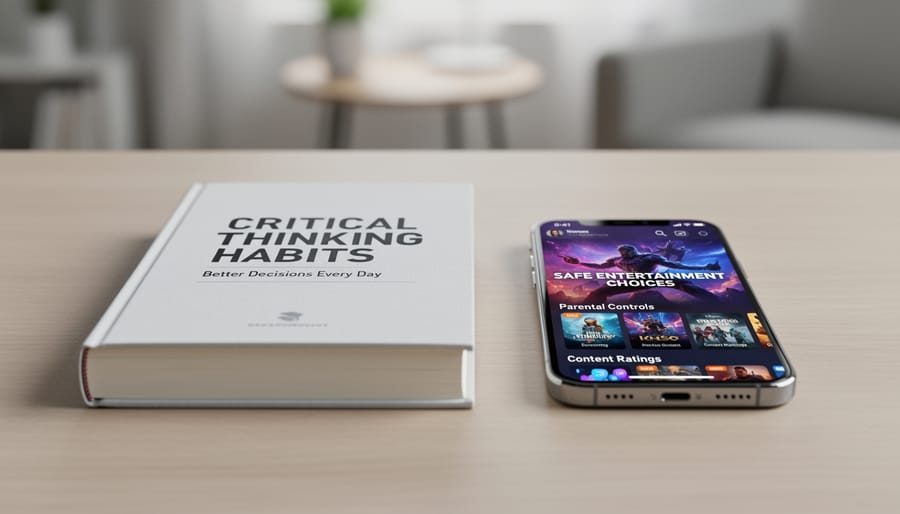
Last summer, I found myself applying the same scrutiny to a casino platform’s terms and conditions that I’d just used dissecting an unreliable narrator in a psychological thriller. The parallel struck me: we spend years honing our ability to read between the lines of fiction, yet rarely apply that same rigor to entertainment platforms vying for our attention and money.
When we read fiction, we instinctively track patterns. We notice when a character repeatedly makes impulsive decisions and mentally prepare for consequences. We recognize foreshadowing. We question whose version of events we’re hearing. These aren’t just literary skills, they’re survival tools for navigating any persuasive narrative, including the ones casino platforms construct about easy wins and entertainment value.
Consider how effortlessly you spot manipulative pacing in a novel. The author withholds crucial information, creates artificial tension, or rushes through warning signs to keep you hooked. Online casinos employ remarkably similar techniques: flashing lights, near-miss animations that feel like victories, and bonus structures designed to obscure actual odds. The reader who can identify when an author is emotionally manipulating them toward a twist is equally equipped to recognize when game design is manipulating them toward another spin.
Book reviewers develop a particular superpower: the ability to evaluate credibility. We learn which reviewers share our tastes, whose “five stars” actually mean three, and which glowing reviews feel suspiciously vague or compensated. Apply this lens to casino platform reviews, and red flags emerge clearly. Are user testimonials specific or generic? Do negative reviews describe concrete problems or just vague disappointment? Is the platform transparent about odds, or does it bury important details in jargon?
Perhaps most valuably, serious readers understand consequences as part of narrative structure. We recognize that choices characters make in chapter three will echo through chapter twenty. This long-view thinking translates directly to gambling behavior. A “harmless” fifty dollars tonight connects to next week’s budget. An hour turns into three without conscious transition. The reader trained to see cause and effect across hundreds of pages possesses exactly the perspective needed for responsible play.
We’ve already done the work of becoming critical thinkers. Now it’s just a matter of pointing that skill in a new direction.
Books That Explore Gambling: Fiction as a Mirror and Warning
Contemporary Fiction Confronting Casino Culture
Contemporary fiction has begun catching up to our digital age’s darker corners, and several recent novels have turned their gaze toward online gambling with unflinching honesty. These aren’t the glamorous casino heist stories of old, they’re psychological explorations of how smartphones and betting apps have transformed addiction from something that happens in smoky rooms to something that unfolds in our pockets, on our commutes, and during lonely late-night hours.
I discovered one of the most powerful examples while compiling my best fiction books list a few years back: novels that capture how seamlessly online platforms integrate into daily life, making it difficult to recognize when entertainment crosses into compulsion. These works explore the psychology of gamification, the illusion of control that interfaces provide, and the particular isolation of digital gambling, where losing doesn’t involve handing over cash to another person but simply watching numbers decrease on a screen.
What strikes me most about these contemporary narratives is their refusal to moralize. Instead, they illuminate the subtle mechanisms: the push notifications that create urgency, the near-misses that feel like progress, the way algorithms personalize temptation. Reading them reminds us that responsible engagement with any digital entertainment requires conscious awareness of these psychological hooks, knowledge that transforms passive users into informed participants.
Classic Literature’s Timeless Lessons on Risk and Reward
Dostoevsky’s The Gambler, written in 1867, remains startlingly relevant today. I first read it during a rainy weekend in Prague, appropriately enough near the city’s historic casinos, and was struck by how little human psychology has changed. Dostoevsky wrote the novel in just 26 days to pay off his own gambling debts, and that desperation bleeds through every page. His protagonist Alexei’s spiral into compulsive gambling isn’t driven by money but by the intoxicating illusion of control, the belief that the next spin will vindicate all previous losses.
What makes nineteenth-century gambling literature so instructive is its unflinching portrayal of rationalization. In Balzac’s The Wild Ass’s Skin, the protagonist trades years of his life for fleeting moments of wish fulfillment, a metaphor that resonates when we think about time and money wagered online. These authors understood that gambling’s real danger lies not in the games themselves but in how they warp our perception of probability and consequence.
The psychological patterns these classics illuminate, the gambler’s fallacy, loss-chasing, the fantasy of “one big win”, haven’t evolved despite technological advances. While contemporary works like our 2010s fiction picks explore digital betting platforms, Dostoevsky’s insights into the addictive thrill of risk remain the foundation. Reading these older texts isn’t an academic exercise. It’s seeing ourselves reflected in characters who made the same mistakes 150 years ago, a humbling reminder that technology may change but human vulnerability to temptation doesn’t.
Reading the Fine Print: How Book Reviewers Approach Online Casino Reviews

Here’s the moment where your book reviewer superpowers become genuinely practical: evaluating online casino platforms requires exactly the same critical eye you’ve honed over years of reading between the lines. When I first approached casino reviews with the same scrutiny I bring to how to write reviews for novels, I was stunned by how many warning signs mirror bad publishing practices, misleading blurbs, buried disclaimers, suspiciously uniform praise.
Start with the equivalent of checking an author’s credentials: licensing and regulation. Just as you’d verify a memoir’s factual accuracy or research a publisher’s reputation, confirm the casino holds proper licensing from recognized authorities. Legitimate platforms display these badges prominently, much like award stickers on book covers. If this information is hidden or vague, that’s your first red flag. The security checks before playing parallel the due diligence you’d do before trusting a new author with your time.
Terms and conditions deserve the same attention you give to reading the acknowledgments and author’s note, they reveal what’s really happening behind the polished surface. I’ve learned to spot predatory wagering requirements the way I identify plot holes: they don’t add up when you think them through. Withdrawal limits, bonus terms, and time restrictions should be transparent and reasonable. Vague language or deliberately confusing clauses? Walk away, just as you’d abandon a book that insults your intelligence.
User reviews require your sharpest analytical skills. Notice patterns in complaints the way you’d track recurring weaknesses in an author’s work. Are negative reviews specific and detailed while positive ones sound generic? That imbalance tells a story, much like studying book-to-movie adaptations teaches you to spot when something fundamental gets lost in translation. Genuine user experiences include specifics, how long withdrawals actually took, which customer service channels worked, what the interface really feels like.
Finally, trust your instincts. If a casino’s promises sound too good to be true, apply the same skepticism you’d use when a book cover promises “the next Gone Girl meets The Da Vinci Code.” Your literary training has taught you to spot authenticity, recognize substance over flash, and value transparency. Those skills are your best protection here.
Setting Limits Like Setting Reading Goals: A Framework for Balance

I’ve always been someone who tracks my reading, pages per day, books per month, that satisfying feeling of hitting my Goodreads challenge goal. Last year, though, I started applying the same structure to my occasional online casino visits, and the results surprised me. The habits that keep my reading life balanced turned out to work just as well for keeping entertainment spending in check.
Think about it: most of us don’t walk into a bookstore and buy everything we see. We have budgets, TBR piles we’re trying to manage, and a sense of when we’ve spent enough time reading instead of doing other things. These same principles create a framework for approaching online casino play responsibly.
Here’s how I adapted my reading goal system into entertainment boundaries:
- Set a monthly entertainment budget the way you’d budget for books, a specific dollar amount you’re comfortable losing, separate from bills and savings.
- Track your time like you track reading hours, use phone timers or app limits to cap casino sessions at 30-60 minutes, just as you might limit evening reading to avoid late nights.
- Create a “cooling-off” list similar to your TBR wishlist, when you’re tempted to keep playing, add games to a list to try next session instead of immediately depositing more money.
- Review your patterns monthly, the way you’d assess reading stats, are you diversifying your entertainment or fixating on one activity? Are you staying within your limits?
- Build in “genre breaks”, just as reading the same type of book gets exhausting, gambling should be one entertainment option among many, not your only leisure activity.
The structure creates distance between impulse and action. When I feel like extending a session, I treat it like wanting to buy just one more book when I’m already over budget, I pause, check my limits, and usually realize I’m satisfied with what I’ve already experienced.
Most reputable platforms now offer tools that mirror this approach: deposit limits, session timers, and self-exclusion options. These aren’t restrictions; they’re the same kind of helpful guardrails that reading challenges and TBR management provide. You can read more tips about building sustainable habits that translate across different areas of life, whether you’re cultivating a reading practice or ensuring entertainment stays entertaining rather than compulsive.
The goal isn’t perfection. Some months I read less, some months I exceed my book budget for a special edition. But the framework keeps me honest and intentional about how I spend my time and money.
When the Story Takes a Dark Turn: Recognizing Warning Signs
We’ve all been there with a book, telling ourselves “just one more chapter” at 2 AM, or returning to a story that’s making us miserable because we need to know how it ends. Sometimes that obsessive reading is harmless (if sleep-deprived). But occasionally, we recognize we’re no longer enjoying the experience; we’re trapped in it.
Online casino play can follow a similar trajectory, and the warning signs often mirror the compulsive behaviors we recognize in fictional characters who’ve lost their way.
If you find yourself thinking about online casinos during other activities, much like being unable to stop thinking about a book’s plot twist, that’s worth examining. Are you logging in not because you’re excited, but because you feel restless or anxious when you don’t? This shift from “want to” to “have to” is significant.
The financial red flags are clearer but equally important: chasing losses with the same fervor you’d chase a series finale, spending money earmarked for necessities, or hiding casino spending from loved ones the way a character might hide a destructive secret. When you’re borrowing money to play or lying about how much time you spend on gambling sites, the entertainment has become something else entirely.
Perhaps most telling is when casino play stops being fun yet you can’t stop, the same hollow feeling you’d get from hate-reading a book series you no longer enjoy but feel compelled to finish.
If these patterns sound familiar, reaching out isn’t weakness; it’s wisdom. The National Council on Problem Gambling operates a 24/7 helpline at 1-800-522-4700. In the UK, GamCare offers support at 0808 8020 133. Many online platforms also provide self-exclusion tools and reality checks.
We extend empathy to fictional characters facing their demons. We deserve that same compassion for ourselves when the story of our own entertainment takes an unexpected, darker turn.
I still remember sitting in my favorite reading nook last winter, tea going cold as I finished a novel about a character whose life unraveled through unchecked gambling. That book stayed with me, not because it was preachy, but because it showed how small choices compound into life-changing consequences. The same way a single chapter can shift an entire narrative arc.
That’s what I’ve come to appreciate about being a reader. We spend hours analyzing motivations, questioning reliability, spotting foreshadowing. We know when an author’s trying to manipulate our emotions. We pause before the next chapter when we should be sleeping. These aren’t just literary skills. They’re life skills.
When you approach online casinos with the same thoughtful mindfulness you bring to choosing your next read, everything changes. You ask better questions. You recognize patterns. You know when to close the book and walk away.
The discipline we’ve cultivated through reading, setting boundaries, managing time, understanding our own responses to stimulation, serves us in unexpected places. Entertainment should enrich our lives, not consume them. Whether that’s getting lost in a brilliant story or enjoying a few spins on a slot machine, the principle remains the same: stay present, stay intentional, stay in control.
So keep reading critically. Keep questioning. And carry that same curiosity and self-awareness into every corner of your life. Your future self will thank you for it.